
Massage on Charoen Krung, to your door
Charoen Krung was the first paved road in Thailand and it still runs the way it did, which makes it the most interesting address in the city to find and occasionally the hardest.
- Arrival30 to 50 minutes
- Hours24 hours, every day
- TherapistsLicensed, named first
- FromTHB 900, pay after
The first paved road in the country, and it still behaves like one.
Charoen Krung was built in the 1860s as the first paved road in Thailand, running from the old city down along the eastern bank of the Chao Phraya. It predates the grid, it predates the rail lines, and it was laid out for carts rather than for cars, which is why it behaves the way it does today.
What Charoen Krung books most
Ordered by what people here actually choose, rather than by our menu. Every one is worked on your own bed with sheets and oil the therapist brings with her.
Traditional Thai massage
Stretching and acupressure along the body's energy lines, worked through clothing without oil. Firm, and on tight muscles it can smart. Worked on your bed, so there is nothing to clear.
Details
Relaxing oil massage
Long, even strokes with warm unscented oil. The most straightforward thing on the menu, and the one to pick if you simply want the tension gone.
Details
Deep tissue massage
Slower and heavier than an oil massage, aimed at the knots underneath rather than the surface. Say the word at any point and she eases off.
Details
Aromatherapy massage
The same slow work as an oil massage, with a scented blend chosen for what you need. Lemongrass to wake up, lavender to sleep. Most people book this one at night.
Details
Coconut oil massage
Cold-pressed coconut oil rather than the standard blend. Lighter on the skin, absorbs rather than sitting on top, and it is what most Thai therapists use on themselves.
Details
Office syndrome massage
Targeted work on the neck, shoulders and upper back for people who sit at a desk all day. The one to book if your pain has a laptop-shaped cause.
DetailsThe road passes through several distinct quarters on its way south. Talat Noi and the Chinatown fringe at the northern end, then the old trading district, then Bang Rak, and finally the stretch behind the riverside hotels toward Sathorn. Each has a different character and they are only loosely connected by the road they share, which is why an address here needs the soi rather than the district name.
What has happened over the last decade is a creative revival. Old warehouses and shophouses have become galleries, design studios, coffee roasters and small hotels, and the district now carries a design-week crowd alongside the machine shops and metal traders who never left. Both are still here and they sit side by side.
The accommodation follows from that. Boutique hotels in converted buildings, apartments in old shophouses, a few newer blocks, and the back entrances of several riverside hotels whose front doors face the water rather than the road.
For us this is the most characterful district in Bangkok and the one where the address matters most. The lanes off Charoen Krung are narrow, old and numbered in a way that rewards precision and punishes a vague description.
The soi numbers, and why they are the whole address
Charoen Krung has numbered sois running off it on both sides, and unlike Sukhumvit they are not tidy. The numbering runs high, the spacing is uneven, and several of the lanes are barely wide enough for a motorcycle, let alone a car.
That makes the soi number the single most valuable thing in a booking message here. A building name on this road is frequently not enough, because many of the buildings do not have names at all and the ones that do are small enough not to be widely known.
The second most valuable thing is which side of the road you are on. Charoen Krung is a busy two-way road with limited crossings, and the sois on the river side lead down toward the water while those on the other side lead inland. Being sent to the wrong one costs several minutes on foot.
The third is a landmark, and here they genuinely help. A temple, a mosque, a particular coffee shop, a gallery. This is a district of small distinctive places rather than large anonymous ones, and one of those does more work than a house number.
The sois run past seventy and they are not evenly spaced. The number is the only thing that places you.
The lanes, and what she will find at the end of them
Not all the sois off this road are the same kind of street, and knowing which sort yours is helps us quote honestly.
Wide sois
Some are proper roads with two-way traffic, shops and clear numbering. Those behave like any other district and the estimate is straightforward.
Narrow lanes
Many are narrow lanes wide enough for a motorbike and nothing more. She will be on foot for the last stretch, which is fine, but it adds a few minutes and is worth knowing about in the rain.
Dead ends
A good number simply stop. Charoen Krung sois frequently dead-end at the river, a wall or a temple compound, and a vehicle that goes down one has to reverse out. If yours is a dead end, say so.
The riverside back doors
Several riverside hotels have their service entrances on Charoen Krung while their front doors face the water. If you are in one of those, tell us the hotel and we will use whichever entrance is actually open at that hour.
What Charoen Krung books
Traditional Thai, and the neighbourhood preference
Traditional Thai leads on this road and the customer base is the reason. Talat Noi and Bang Rak hold long-established Thai and Chinese Thai households, many of them living where they have lived for generations, and the stretching is the treatment they know. It is asked for by name rather than chosen from a list.
Oil massage in the boutique hotels
Straight oil massage is second and comes mostly from the boutique hotels. Their guests are typically here for a few nights, often for the design and food rather than the temples, and they book the uncomplicated thing.
Deep tissue from the workshops
Deep tissue arrives from the working side of the district that the creative revival never displaced. Metal shops, printers, mechanics and market traders, and the complaint is hands, forearms, shoulders and lower back rather than a desk-shaped one.
Aromatherapy, the creative-quarter booking
Aromatherapy has grown here alongside the galleries and the studios, and it is the treatment of choice among the newer residents. Late bookings, usually in a converted shophouse apartment, and usually somebody who works for themselves and keeps irregular hours.
Living in a converted shophouse
A great deal of the residential accommodation in this district is old shophouse space that has been converted, and it is a lovely way to live with three practical quirks for a treatment.
The first is stairs. These buildings are tall and narrow, the stairs are steep, and there is never a lift. Tell us the floor. It is not an obstacle, it is just information she would rather have before she starts up with a mat under one arm.
The second is the layout. A shophouse is deep rather than wide, so the room at the back may have no window and the room at the front may be above the street. For a treatment the back room is usually quieter and the front room usually cooler, and it is worth deciding which you want before she arrives rather than during.
The third is the street door. If the ground floor is a business that has closed for the night, the door may be shuttered with no bell and no way in. Somebody has to come down. This is the single most common cause of a late arrival on Charoen Krung and it is entirely avoidable with one line in a message.
Therapists who cover Charoen Krung
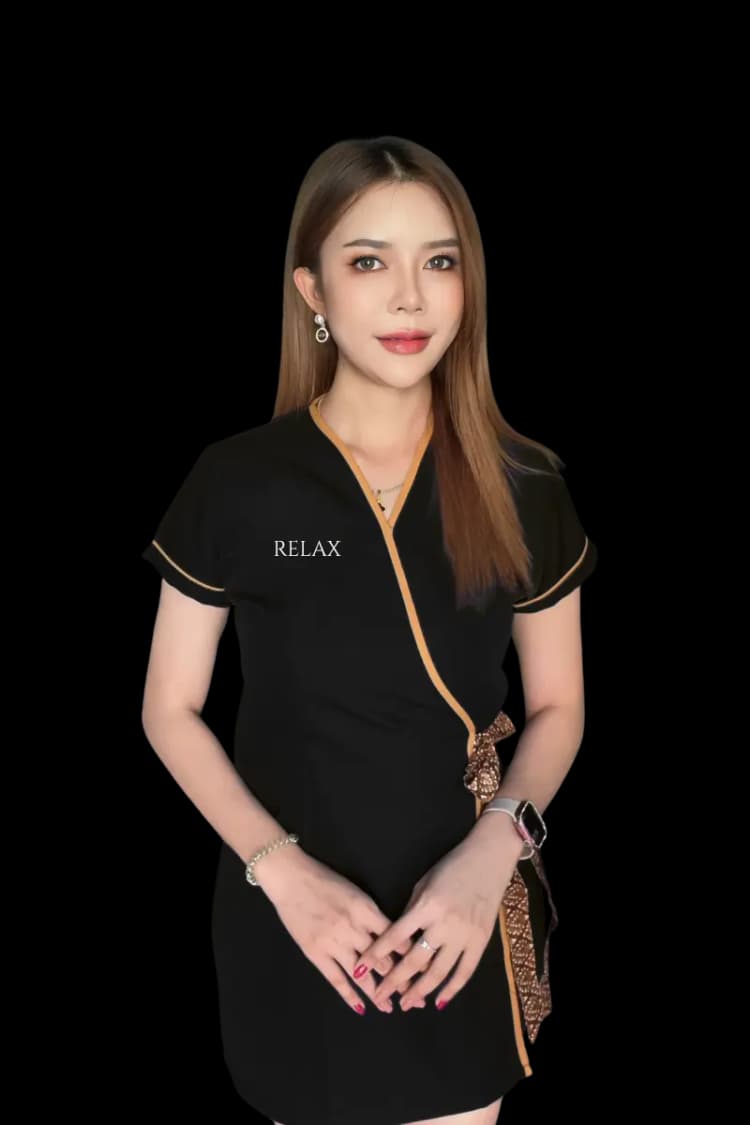
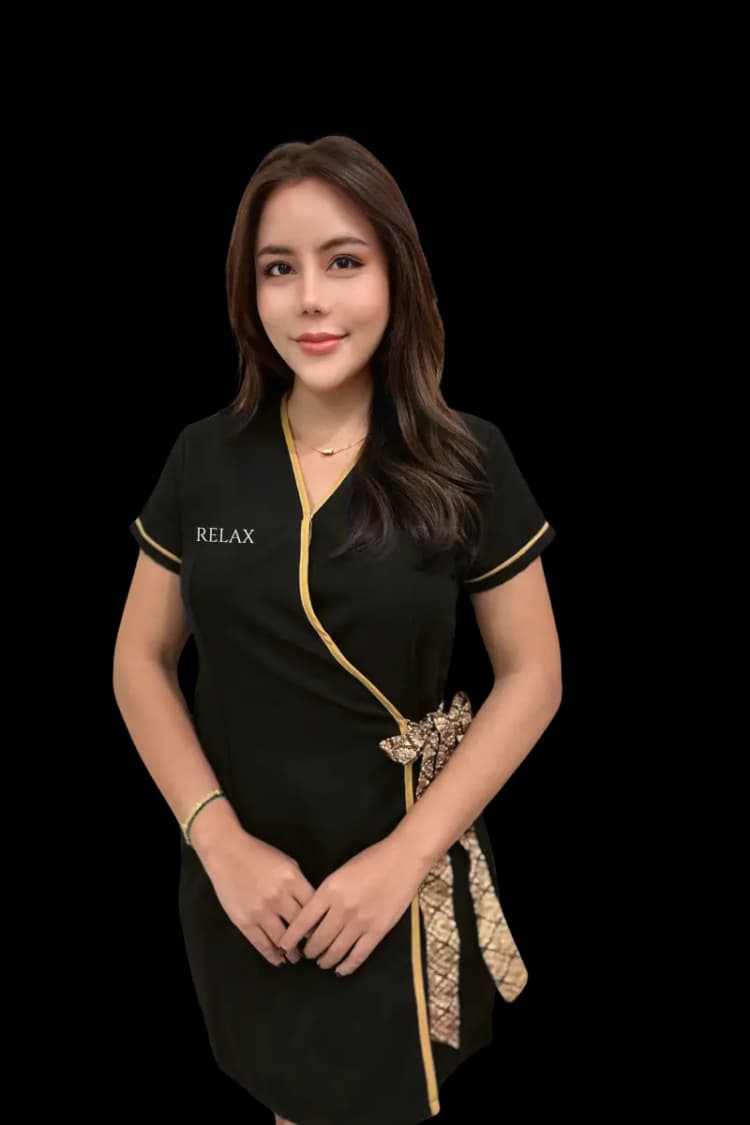
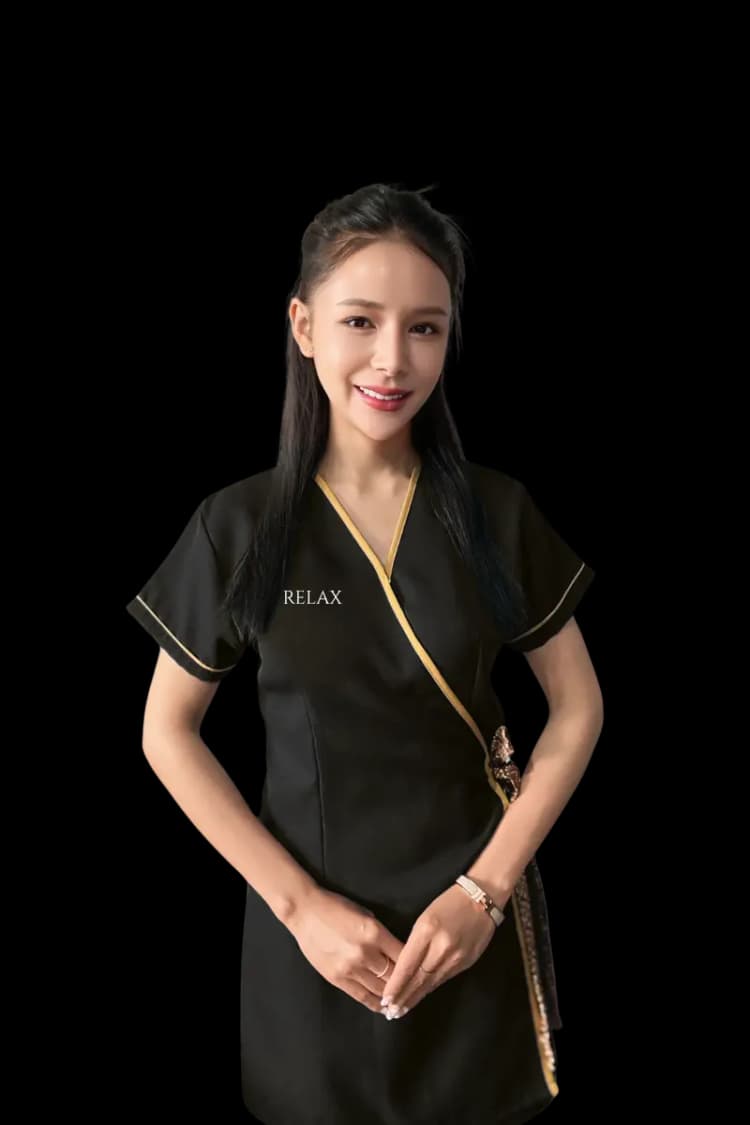
Every one of them trained in Thailand and holds a Ministry of Public Health licence. You get told who is coming before they knock.

The northern end, and the Chinatown fringe
The top of Charoen Krung runs into Talat Noi and then toward Yaowarat, and that stretch is genuinely different from the Bang Rak end. It is older, denser and considerably harder to navigate.
The lanes up there are some of the narrowest in central Bangkok, the buildings are close-packed and low, and the whole quarter is threaded with alleys that do not appear on most maps. It is also full of small workshops, shrines and family businesses that have been in the same doorway for decades.
We cover all of it and the arrival window runs at the longer end, sometimes past fifty minutes. The addresses need describing rather than naming, and a pin plus a landmark plus a lane is the combination that works.
If you are up there and unsure whether to use this page or the Yaowarat one, the practical test is which road you walk out onto. If it is Charoen Krung, this page fits. If you come out onto Yaowarat Road itself, the Chinatown page will describe your building better.
Booking in a district that keeps odd hours
Charoen Krung does not run on an office clock and the demand pattern here is flatter than almost anywhere else we work. A few things follow from that.
Daytime bookings are genuinely easy. The self-employed population and the boutique hotel guests are both around in the middle of a weekday, so a same-hour request at two in the afternoon is realistic.
The evening peak is mild rather than sharp. This district does not empty at nine in the morning and refill at seven, so the seven to ten crush that dominates the business areas is much softer here.
Very late is quiet and easy, with one exception. The bar and restaurant pocket around the lower sois runs later at the weekend and bookings there carry on past one in the morning.
Sunday is the busiest single day, driven by the galleries, the markets and the weekend visitors staying in the small hotels. If you want a specific therapist on a Sunday afternoon, ask on the Friday.
Give more notice than you would in a modern district. Not because we are busy but because the address takes longer to reach, and an extra half hour of warning lets us route somebody sensibly.
Where the road runs from and to
Charoen Krung is long, and which part of it you are on changes both the character and the estimate.
North to Talat Noi
The northern end at Talat Noi and the Chinatown fringe is the oldest and hardest to reach. Narrow lanes, dense building, and an arrival window at the top of the range.
The middle at Bang Rak
The middle around Bang Rak is the most straightforward. Market, hotels, a proper street grid by the standards of this road, and reasonable access.
South toward Sathorn
The southern stretch toward Sathorn and Saphan Taksin is the easiest of all, because the BTS comes down to meet it and the buildings are newer.
West to the water
Westward, every soi eventually reaches the river or something built against it. The riverside hotels and the piers are covered on their own page, and if you can see the water from your room that is the one you want.
What the district asks about most
The question we get most often on Charoen Krung is whether we will actually come, and the reason people ask is that plenty of services will not. Food delivery is unreliable in the narrow lanes and several taxi applications simply refuse some of these addresses.
We do come, to all of it, and the therapist walks the last part where a vehicle cannot go. That is normal here and it is built into the estimate rather than being treated as a favour or an exception to be negotiated.
What we ask in return is a better address than you would need to give in a modern district. The soi number, the side of the road, a landmark and ideally a pin. With those four things a first visit goes smoothly, and every visit after that is easy because she has already been.
The price is the same as everywhere else in the city. There is no surcharge for a difficult address, no minimum, and no deposit. The difficulty is ours to solve rather than yours to pay for.
Everywhere we go in Charoen Krung
Find yours below. If it is not here we almost certainly still come, so send the building name and we will confirm in a minute.
Stations
- BTS Saphan Taksin
- MRT Hua Lamphong
- MRT Sam Yan
- BTS Surasak
- Sathorn Pier
- Si Phraya Pier
- MRT Wat Mangkon
Streets and sois
- Charoen Krung Road
- Soi Charoen Krung 30
- Soi Charoen Krung 32
- Soi Charoen Krung 36
- Soi Charoen Krung 42
- Soi Charoen Krung 44
- Si Phraya Road
- Soi Wanit 2
- Talat Noi lanes
- Silom Road
Landmarks
- Warehouse 30
- TCDC Bangkok
- River City Bangkok
- Bangrak Market
- Talat Noi
- Assumption Cathedral
- Portuguese Embassy
- Robinson Bangrak
- Holy Rosary Church
Buildings we travel to
Listed as places we deliver to. We have no arrangement with any of them and nothing here should be read as one.
Hotels
- Mandarin Oriental Bangkok
- Royal Orchid Sheraton
- Shangri-La Bangkok
- The Peninsula Bangkok
- Chatrium Hotel Riverside
- Ibis Styles Bangkok Silom
- Baan Wanglang Riverside
Condominiums and residences
- The River Condominium
- Menam Residences
- Baan Chao Praya
- State Tower residences
- Supalai River Place
Who books in Charoen Krung
- Long-established households
- Talat Noi and Bang Rak families, often in the same building for generations. Traditional Thai asked for by name.
- Boutique hotel guests
- Converted buildings along the road, usually here for the food and the design rather than the temples.
- Workshop and market traders
- Hands, forearms and lower back rather than a desk complaint. Deep tissue, and rarely anything scented.
- Creative-quarter residents
- Studios and galleries, irregular hours, and late aromatherapy bookings in converted shophouses.
- Weekend visitors
- Sunday is the busiest day here, driven by the galleries and the markets rather than by the residents themselves.
Questions about Charoen Krung
Will you actually come down the narrow lanes?
What do you need to find me?
My soi is a dead end. Does that matter?
I live above a shop that closes in the evening. What happens?
Which floor should the treatment be on?
Is the northern end near Talat Noi harder to reach?
Should I use this page or the Chinatown one?
Can I book for a room in one of the riverside hotels from this road?
Is there a surcharge for a difficult address?
Near Charoen Krung
Riverside
The grand hotels on the Chao Phraya. Almost entirely visitors, and the boat is the road.
Surasak
The quiet western end of the business district, where the towers thin out and the old shophouses begin.
Silom
The old financial district. Packed on a Tuesday, deserted on a Sunday.
Yaowarat
Chinatown. The oldest, densest and most difficult district to navigate that we cover.
Sathorn
Embassies, corporate towers and the densest run of five-star rooms in Bangkok.
A therapist to your door in Charoen Krung
Message us with the building name and a time. Nothing is taken up front, and you pay the therapist when she has finished.