
Massage in Khlong Toei, to your door
Khlong Toei holds the port, the largest fresh market in Bangkok and a run of brand new towers on Rama 4, which makes it the most sharply divided district we cover.
- Arrival25 to 45 minutes
- Hours24 hours, every day
- TherapistsLicensed, named first
- FromTHB 900, pay after
A working port on one side of the road and glass towers on the other.
Khlong Toei is the district south of Sukhumvit and north of the river, and it is defined by two things that have almost nothing to do with each other. The first is the Port of Bangkok, which occupies an enormous area of the south of the district and has done since the 1930s, along with the market, the customs houses and the dense residential community that grew up around it.
What Khlong Toei books most
Ordered by what people here actually choose, rather than by our menu. Every one is worked on your own bed with sheets and oil the therapist brings with her.

Deep tissue massage
Slower and heavier than an oil massage, aimed at the knots underneath rather than the surface. Say the word at any point and she eases off.
Details
Traditional Thai massage
Stretching and acupressure along the body's energy lines, worked through clothing without oil. Firm, and on tight muscles it can smart. Worked on your bed, so there is nothing to clear.
Details
Relaxing oil massage
Long, even strokes with warm unscented oil. The most straightforward thing on the menu, and the one to pick if you simply want the tension gone.
Details
Aromatherapy massage
The same slow work as an oil massage, with a scented blend chosen for what you need. Lemongrass to wake up, lavender to sleep. Most people book this one at night.
Details
Office syndrome massage
Targeted work on the neck, shoulders and upper back for people who sit at a desk all day. The one to book if your pain has a laptop-shaped cause.
Details
Coconut oil massage
Cold-pressed coconut oil rather than the standard blend. Lighter on the skin, absorbs rather than sitting on top, and it is what most Thai therapists use on themselves.
DetailsThe second is Rama 4 Road, the northern boundary, which over the last decade has become one of the largest redevelopment corridors in the city. Whole blocks that were warehouses and low-rise commercial buildings are now glass towers, offices, hotels and expensive apartments, and the transformation is still under way.
Between them sits Khlong Toei market, the biggest fresh market in Bangkok and the place a large share of the city's restaurants buy from. It runs through the night, which gives this district an around-the-clock working population that most of Bangkok does not have.
Benjakitti Park and the Queen Sirikit convention centre occupy the northern edge, and the MRT runs along Rama 4 through the middle of it, which makes the northern half of the district considerably easier to reach than the southern half.
For us it is genuinely two areas. Bookings on the Rama 4 side are new towers, hotels and corporate apartments, and they behave like Asok. Bookings deeper into the district are residential, older and slower to reach, and they behave like nowhere else on our list.
The two halves, and which one you are in
It is worth working out which part of Khlong Toei you are actually in before you book, because the four pockets below want quite different things and have quite different arrival times.
The Rama 4 corridor
The Rama 4 corridor along the north is the new city. Office towers, recently built hotels and serviced apartments, formal lobbies and lift access controls. Quick to reach, straightforward to enter, and the bookings look like the central business districts.
Around Queen Sirikit
Around Queen Sirikit and Benjakitti Park the buildings are a mix of older condominiums and newer towers, quieter than Rama 4 itself, and this is where most of our residential regulars in the district live.
The market
The market area is dense, busy at all hours and awkward to drive into. If you live in one of the blocks above or beside it, meeting in the lobby or at the mouth of the lane saves several minutes.
The port community
The port community in the south is the oldest part and the hardest to navigate. Narrow lanes, close-set housing, and addresses that need describing rather than naming. We come, and it takes longer.
The market, and the hours it keeps
Khlong Toei market is a wholesale operation as much as a retail one, and the wholesale part happens overnight. Deliveries arrive from the small hours, restaurant buyers come before dawn, and by the time most of Bangkok is having breakfast a full working shift has already finished.
That gives this district a genuinely nocturnal population, and it produces bookings at hours that would be unusual anywhere else. Four and five in the morning are not strange requests here, and they are frequently from people finishing work rather than people who cannot sleep.
The treatments those bookings take are physical-labour treatments rather than desk ones. Lower back, shoulders, forearms, feet and calves, from lifting and from standing on concrete for eight hours. Deep tissue and traditional Thai, almost never anything scented.
It also means that late is not quiet here in the way it is in a residential district. If you are booking at two in the morning in Khlong Toei you are not the only one, and the wait can be longer at that hour than it would be in Thong Lo.
The market works at three in the morning, so a good share of this district is awake when the rest of the city is not.
Rama 4, and the redevelopment problem
The northern edge of this district has been a construction site for the better part of a decade, and it is still changing. That has one practical consequence for a booking that is worth knowing about.
Addresses on Rama 4 go stale quickly. Buildings that were landmarks five years ago have been demolished, roads have been rerouted around sites, and several of the newest towers are not yet where the mapping applications think they are. A pin dropped from an old cached map can be a block out.
The reliable approach is the building name in full plus the nearest MRT station. The towers along here are large, individually named and unmistakable once you are in front of them, and the station is the fixed point that has not moved.
Access on this stretch is formal but efficient. These are new buildings with proper reception desks, visitor registration and card-controlled lifts, and the procedure is the same as at Asok: sign in, get called up, two or three minutes. Several of the residential towers here will want you to answer the intercom, so keep the phone with you.
What Khlong Toei books
Deep tissue, and the physical work
Deep tissue is the most booked treatment here and its customer base is unlike anywhere else on our list. Port work, market work and construction produce a specific pattern of complaint in the lower back, shoulders and forearms, and the people booking it are treating an occupational injury rather than a stressful week.
Traditional Thai in the older community
Traditional Thai is strong in the older residential parts and it is the default choice among Thai customers throughout the district. Floor space is not always generous in the port community housing, so it is worth mentioning the room when you book.
Aromatherapy and oil on the Rama 4 side
On the Rama 4 side the picture flips entirely and looks like any central business district. Aromatherapy and plain oil massage lead, they are booked late, and the purpose is winding down rather than repairing anything.
Office syndrome in the new towers
Office syndrome sells in the new towers along the northern edge, from people working in the offices below or across the road. Weekday evenings, neck and shoulders, and the same shape of complaint as at Asok.
Therapists who cover Khlong Toei
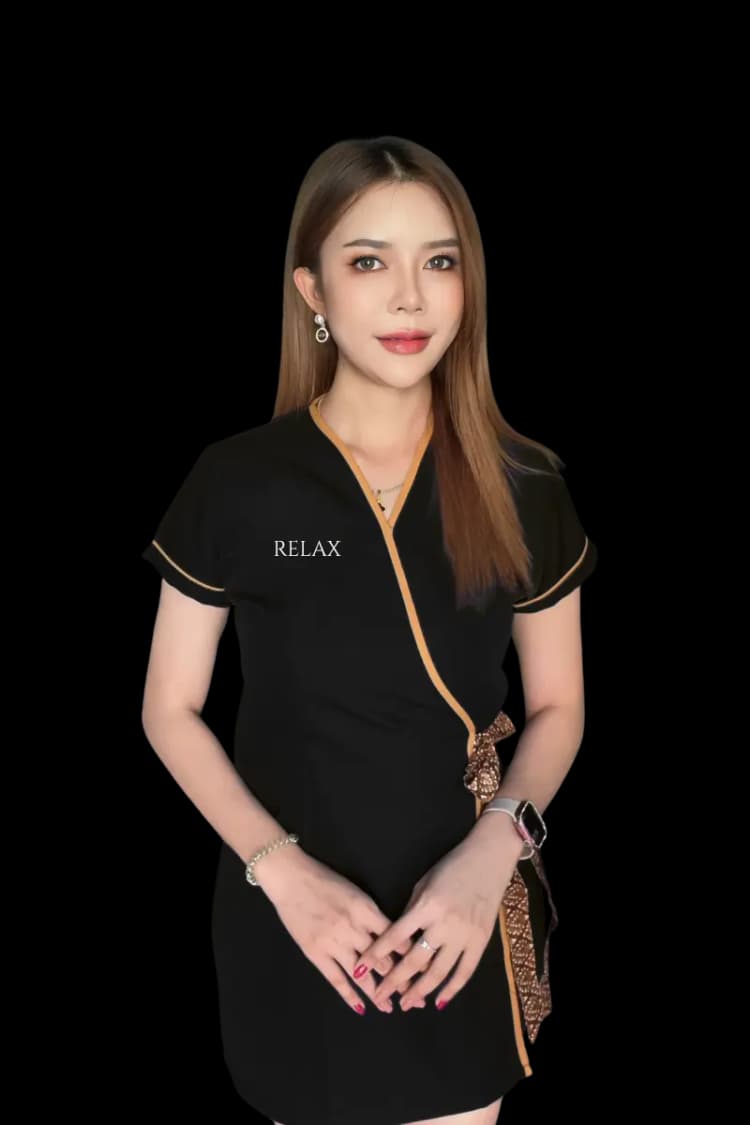
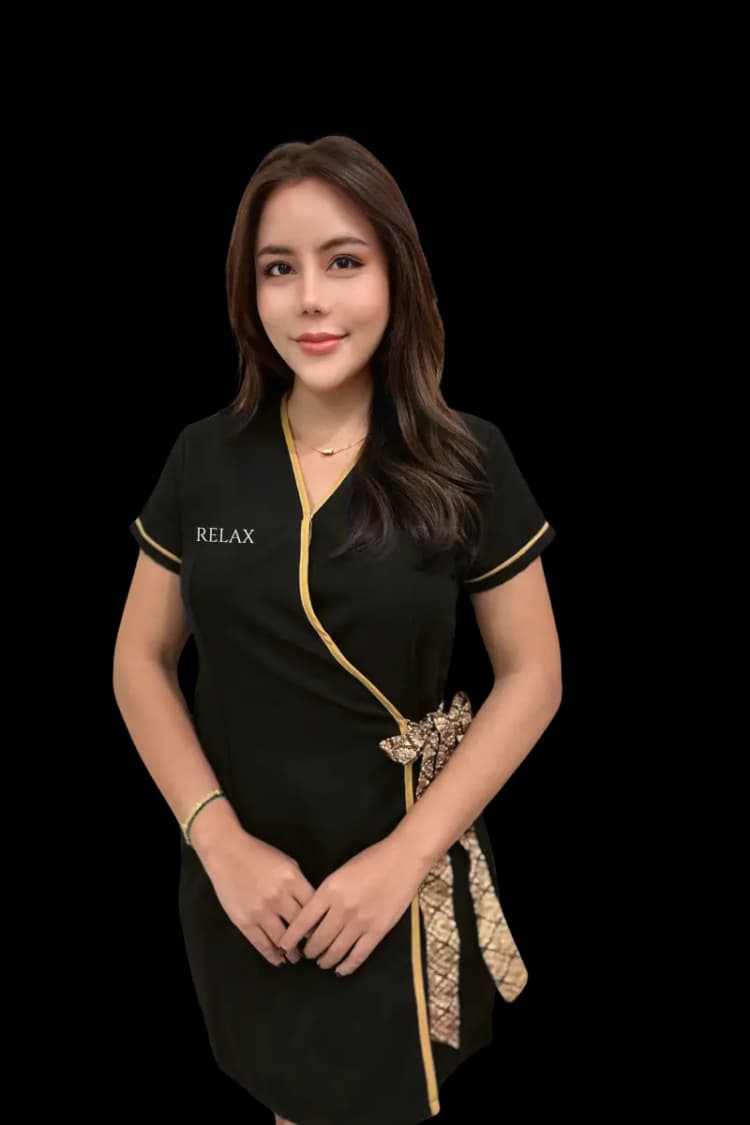
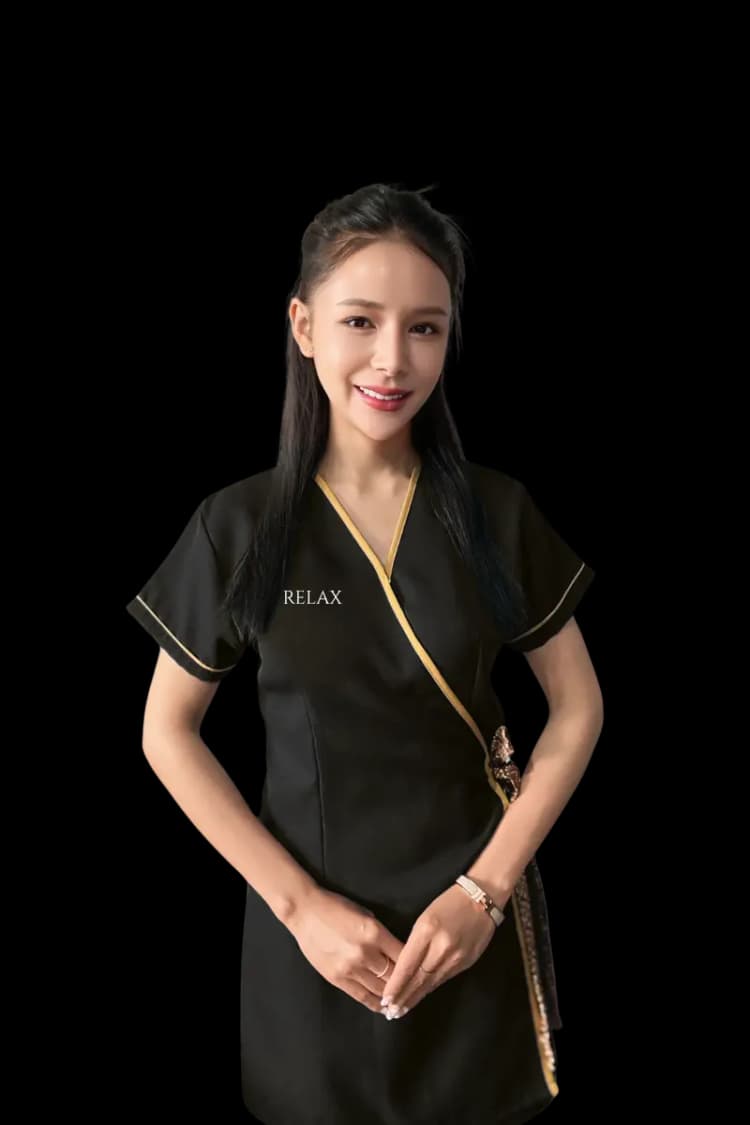
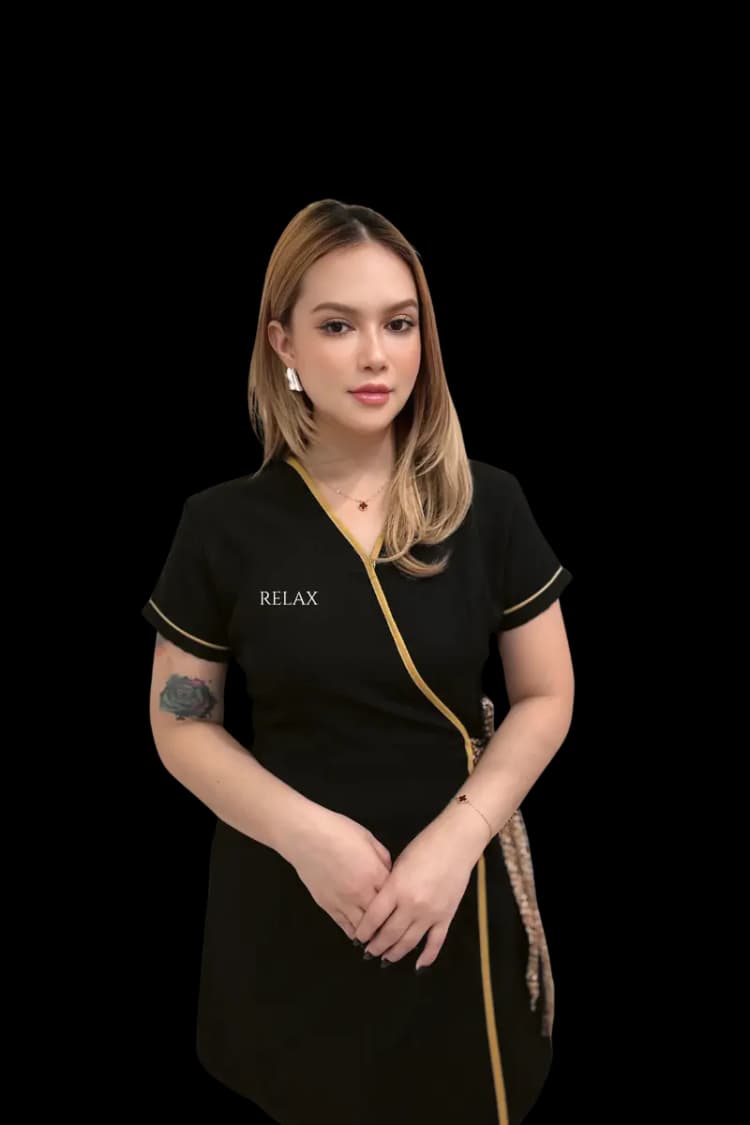
Every one of them trained in Thailand and holds a Ministry of Public Health licence. You get told who is coming before they knock.
Getting into the older parts of the district
The residential core of Khlong Toei is one of the harder places in central Bangkok to deliver anything to, and that is worth being honest about rather than pretending every address is equal.
Give the lane and a landmark rather than a house number alone. The lanes here are narrow, densely built and not always signposted, and a nearby shop, temple or school does more work than the number does.
Say which entrance to the lane you use. Several of these lanes are accessible from more than one road and the difference between them can be five minutes on foot.
Send a pin, and expect a phone call anyway. This is the one central district where we may ring you when she is close, not because anything has gone wrong but because the last hundred metres genuinely benefit from a voice.
Consider meeting at the mouth of the lane for a first booking. Once she has been to your address once she will find it again without trouble, and the first visit is the only awkward one.
Allow a little longer than the quoted window if you are deep in the district. Twenty-five to forty-five minutes is the Rama 4 figure; the port community can run past it.
Booking around a shift rather than a working day
Most of our pages assume you work in the daytime and book in the evening. A substantial part of Khlong Toei does not, and if that is you the useful advice is different.
Book for after your shift rather than before it. A massage before physical work loosens exactly the muscles you are about to need, and while it is not dangerous it is not what you want an hour before lifting crates. Afterwards is the right time and it is when most people here do it.
Do not book straight after finishing if you can wait thirty minutes. Coming off a shift with your heart rate still up and your hands still swollen is not the ideal moment for deep work. A shower and half an hour makes it a better treatment.
Ask for deep tissue by name rather than a general oil massage if the problem is occupational. The pressure and the focus are different, and a therapist told the cause will work the right muscles rather than the obvious ones.
If you work nights regularly and want a standing booking, we can do that at any hour. A five in the morning weekly slot is unusual across the city as a whole and completely ordinary in this district.
Where Khlong Toei sits
Northward, Rama 4 is the boundary and across it the buildings belong to Asok, Phrom Phong and the lower Sukhumvit sois. Those pages describe the towers on the far side of the road even where they look identical to the ones on this side.
Westward the district runs toward Sathorn and the Lumphini area, and around Benjakitti Park the two blend into each other. If you are nearer Lumphini MRT than Queen Sirikit, the Sathorn page is likely the better read.
Eastward it reaches toward Phra Khanong and the canal, an area of older housing and light industry, and southward it runs to the port and the river. Both are covered, and both run at the longer end of the arrival estimate.
The one boundary that genuinely matters for a booking is Rama 4 itself. North of it is fast and formal, south of it is slower and needs describing. Everything else on this page follows from which side you are on.
Prices, and what the district gets asked
This district asks about price more than any other we cover, and from both halves of it for opposite reasons. On the Rama 4 side people assume a new tower means a higher quote. In the older community people assume a cheaper neighbourhood means a cheaper rate.
Neither is true. There is one price list for the whole of Bangkok and it does not move with the building, the postcode or how far the therapist has come. Sixty minutes of deep tissue costs the same in a port community townhouse as it does in a Rama 4 penthouse.
Nothing is taken when you book and there is no deposit at any hour. Payment happens at the end, in cash, by card or by PromptPay, and the number in the confirmation message is the number she asks for.
The one thing that does vary is the wait, and we quote it honestly by which part of the district you are in rather than giving a single figure that would be wrong for half of you.
Everywhere we go in Khlong Toei
Find yours below. If it is not here we almost certainly still come, so send the building name and we will confirm in a minute.
Stations
- MRT Queen Sirikit National Convention Centre
- MRT Khlong Toei
- MRT Lumphini
- BTS Asok
- MRT Sukhumvit
- BTS Phrom Phong
Streets and sois
- Rama 4 Road
- Sunthon Kosa Road
- Soi Sukhumvit 22
- Soi Sukhumvit 24
- Soi Ngam Duphli
- Kluaynamthai Road
- Ratchadaphisek Road
- Port Access Road
Landmarks
- Khlong Toei Market
- Port of Bangkok
- Benjakitti Park
- Queen Sirikit National Convention Centre
- The PARQ
- Sirikit Park
- Kluaynamthai Hospital
Buildings we travel to
Listed as places we deliver to. We have no arrangement with any of them and nothing here should be read as one.
Hotels
- Marriott Marquis Queen Park
- Emporium Suites by Chatrium
- Davis Bangkok
- Fraser Suites Sukhumvit
- Column Bangkok
Condominiums and residences
- Aspire Rama 4
- Rhythm Rama 4
- The Base Park East
- Cooper Siam
- Lumpini Place Rama 4
- Bright Sukhumvit 24
Who books in Khlong Toei
- Market and port workers
- Overnight shifts, physical complaints in the lower back and forearms, and bookings at four in the morning.
- Rama 4 tower residents
- New buildings on the northern edge. Late aromatherapy bookings that look like any business district.
- Office workers
- The towers along Rama 4 and around Queen Sirikit. Weekday evenings and neck and shoulder work.
- Older community households
- The residential core near the port. Traditional Thai, and addresses that need describing rather than naming.
- Convention delegates
- Hotels around Queen Sirikit, arriving in clusters when a large event is running.
Questions about Khlong Toei
Do you come into the older part of Khlong Toei?
Can I book at four in the morning?
My building on Rama 4 is new. Will she find it?
I do physical work. Which treatment should I book?
Should I book before or after a shift?
Is it more expensive in the new towers?
Is there room for traditional Thai in the older housing?
I am here for a convention at Queen Sirikit. How far ahead should I book?
Near Khlong Toei
Asok
The interchange. Business hotels, short stays, and the fastest arrival window we run anywhere in Bangkok.
Phrom Phong
The Emporium end. Japanese families, the deepest daytime demand on the line.
Sathorn
Embassies, corporate towers and the densest run of five-star rooms in Bangkok.
Sukhumvit
The road, not a district. Fifteen kilometres of it, so the soi number decides everything.
Phra Khanong
Where the rents fall off a cliff. A canal, a real market, and younger residents.
A therapist to your door in Khlong Toei
Message us with the building name and a time. Nothing is taken up front, and you pay the therapist when she has finished.