
Massage in Thonburi, to your door
Thonburi is the half of Bangkok on the other side of the river, and the crossing is the thing that decides how long a booking here takes.
- Arrival35 to 60 minutes
- Hours24 hours, every day
- TherapistsLicensed, named first
- FromTHB 900, pay after
Half the city is on this side of the river, and the crossing is the whole journey.
Thonburi is the west bank of the Chao Phraya, and it was the capital of Siam before Bangkok was. Today it holds a very large share of the city's population and a small share of its attention, which is roughly the relationship it has had with the east bank for two hundred years.
What Thonburi books most
Ordered by what people here actually choose, rather than by our menu. Every one is worked on your own bed with sheets and oil the therapist brings with her.
Traditional Thai massage
Stretching and acupressure along the body's energy lines, worked through clothing without oil. Firm, and on tight muscles it can smart. Worked on your bed, so there is nothing to clear.
Details
Deep tissue massage
Slower and heavier than an oil massage, aimed at the knots underneath rather than the surface. Say the word at any point and she eases off.
Details
Relaxing oil massage
Long, even strokes with warm unscented oil. The most straightforward thing on the menu, and the one to pick if you simply want the tension gone.
Details
Aromatherapy massage
The same slow work as an oil massage, with a scented blend chosen for what you need. Lemongrass to wake up, lavender to sleep. Most people book this one at night.
Details
Coconut oil massage
Cold-pressed coconut oil rather than the standard blend. Lighter on the skin, absorbs rather than sitting on top, and it is what most Thai therapists use on themselves.
Details
Couples massage
Two therapists, same room, at the same time, both of you finishing together. Tell us what the room has and we will arrange the second place to lie.
DetailsThe waterfront has changed considerably in the last decade. ICONSIAM and the developments around it have brought high-end retail and expensive condominium towers to the riverside strip, and the BTS extension has connected Wongwian Yai, Krung Thon Buri and the stations beyond to the rest of the network.
Behind that strip, Thonburi remains what it has been: a residential, largely Thai part of the city built along a network of canals, with old temples, local markets, low-rise housing and a pace noticeably slower than the far bank.
Rents are substantially lower than the equivalent on the east side, which is why a growing number of people who work in Sathorn or Silom now live here and cross the river twice a day.
For us the defining issue is the crossing. Bridges are few, the boats do not run all night, and which one applies to your address changes the arrival window by twenty minutes or more.
The crossing, and how it decides everything
Everything about reaching an address in Thonburi comes down to how the river gets crossed, and there are three answers depending on where you are and what time it is.
The BTS crosses at Saphan Taksin and runs through Krung Thon Buri and Wongwian Yai. For any address near those stations the crossing is a non-issue and the arrival window is close to an east bank figure.
The boats cross in a few minutes and serve the riverside strip directly, which is why an address by the water can be quicker to reach than one a kilometre inland. The catch is that the services stop in the late evening.
The bridges are the fallback and they are the slow option. There are not many of them, the approaches are congested, and a journey that takes five minutes on the water can take forty by road once the boats have finished.
So the useful thing to tell us is your nearest bridge or pier alongside the address. It is the single piece of information that lets us quote you an honest number rather than an average that will be wrong either way.
By boat it is five minutes. By road it can be forty. The hour you book at decides which.
The riverside strip, and everything behind it
Thonburi is large and it divides into four quite different zones, with very different arrival times and building types.
The waterfront towers
The waterfront around ICONSIAM and Charoen Nakhon is the newest and most expensive part. High-rise condominiums, luxury hotels, formal management and excellent access by boat.
Along the BTS
Along the BTS through Krung Thon Buri and Wongwian Yai it is a mixture of newer towers and older housing, well connected and reasonably quick to reach.
The canal districts
The canal districts behind hold most of the population. Low-rise housing, older apartment blocks, temples and markets, reached on the road with no rail service. This is where the arrival window lengthens.
Further west
Further west toward Bang Khae and the outer districts it becomes properly suburban, and those journeys run at the top of our range and past it.
What Thonburi books
Traditional Thai, and it is not close
Traditional Thai leads here by one of the widest margins on our list. The population is overwhelmingly Thai, many households have lived on this side for generations, and the stretching is simply what a massage means rather than a choice from a menu.
Deep tissue from the commute
Deep tissue arrives on weekday evenings from the growing population who work on the east bank and cross the river twice a day. An hour and a quarter each way, much of it standing, produces the same neck and lower back pattern the outer Sukhumvit districts show.
Oil massage in the waterfront towers
Straight oil massage is the waterfront treatment, booked in the newer towers by residents and hotel guests who behave much like their equivalents on the far bank.
Bookings for the whole household
Household bookings are common, particularly at the weekend. Several people in one house, frequently across two generations, and the older members almost always steered toward the gentle oil massage rather than the stretching.
Canals, lanes and finding a house
The older parts of Thonburi are laid out around canals rather than roads, and that produces addresses unlike anywhere on the east bank.
Say which side of the canal you are on. Crossing takes a footbridge, the footbridges are not frequent, and being on the wrong side is a real ten minutes rather than a short walk.
Give the temple. Most of these neighbourhoods are organised around one, everybody knows it, and it is by far the most reliable landmark available.
Add the lane and the house number, but expect the landmark to do more work. Numbering along the canal lanes is inconsistent and plates are frequently missing.
Send a pin. Out here it earns its keep in a way it does not in the central districts.
For a first visit, meeting at the temple or the main road is the fastest option. After that she knows the way in and it never comes up again.
The commute, and why people moved here
A growing share of Thonburi residents work on the east bank, and understanding that pattern explains most of our weekday bookings here.
The reason people cross is rent. An apartment here costs a fraction of the equivalent in Sathorn or Silom, and with the BTS extension the journey to those districts is genuinely manageable rather than theoretical.
The cost is time. An hour to an hour and a quarter each way is normal, and it produces a demand curve much like the outer Sukhumvit stations: nothing before half past seven, then busy until midnight.
The complaint is consistent too. Standing on a train, walking between stations and sitting at a desk in between, five days a week, lands in the neck, shoulders and lower back in that order.
For that pattern a standing weekly booking does considerably more than an occasional session, and it is worth setting one up rather than trying to find a slot each week around a long commute.
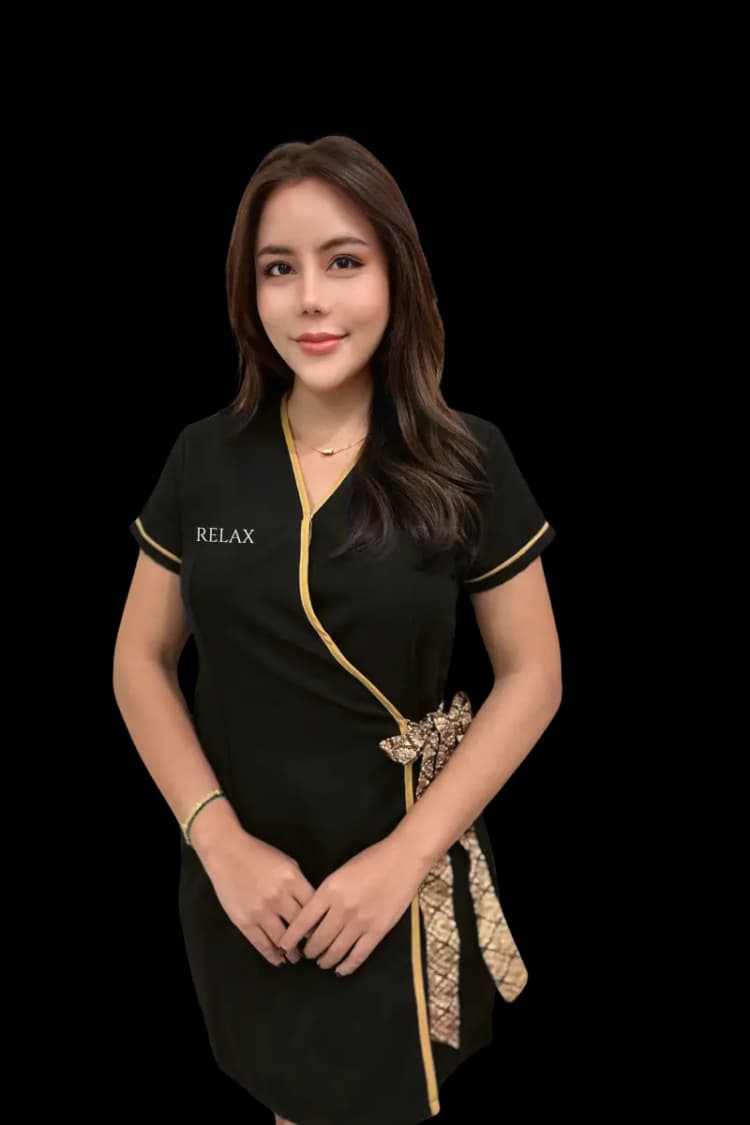
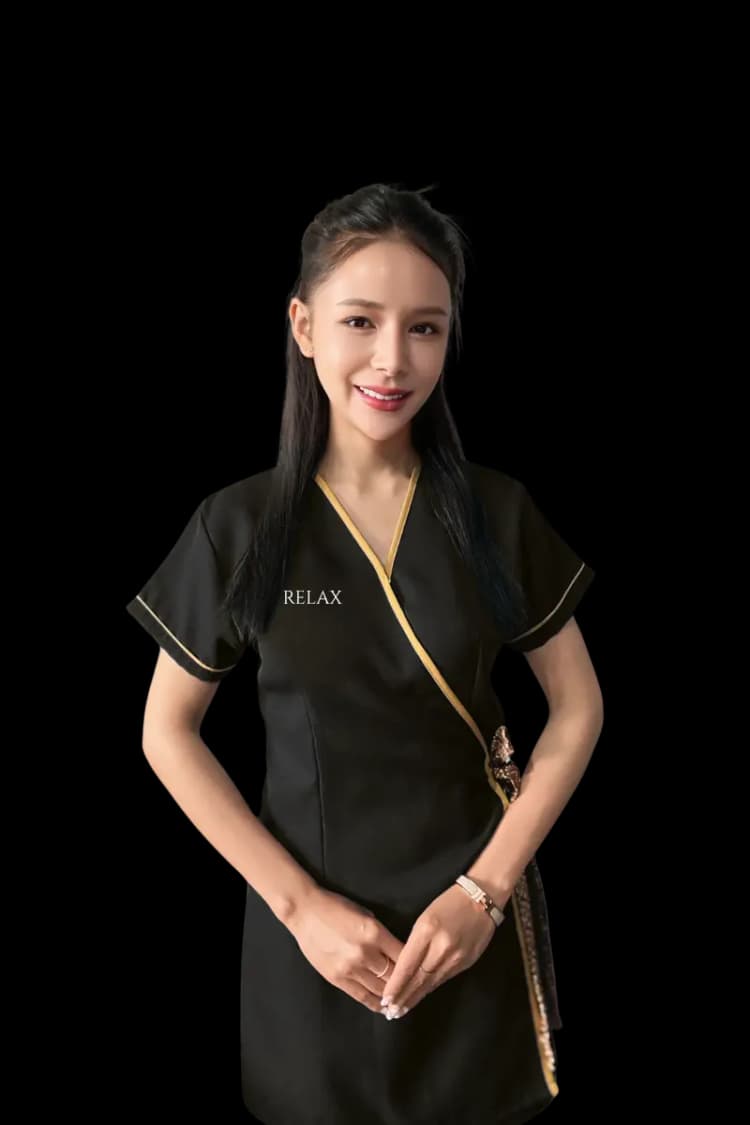
Therapists who cover Thonburi
Every one of them trained in Thailand and holds a Ministry of Public Health licence. You get told who is coming before they knock.


The temples, and the weekend
Thonburi holds a great many of the older temples in Bangkok, including some of the best known, and they shape the weekend rhythm of the residential districts around them.
Saturday and Sunday here are family days in a way the east bank is not. Households are together, the markets around the temples are busy, and our bookings cluster in the afternoon rather than the evening.
The treatments booked at the weekend are longer. Ninety minutes and two hours outsell the sixty by a clear margin, and more than one person in the same house is common.
It is also the one time worth booking ahead in this district. A Sunday afternoon slot with a particular therapist is worth asking about on the Friday, because the weekend here is genuinely the busy part of the week.
The boats, and the hour they stop
Four water services matter for reaching this side of the river, and all of them stop at some point in the evening.
The express boat
The Chao Phraya express boat runs up and down the river and serves piers on both banks. It is fast and it is unaffected by traffic, and it finishes in the evening.
Cross-river ferries
Cross-river ferries shuttle directly between facing piers and take a few minutes. They run later than the express boat but not all night.
Hotel shuttles
Hotel shuttle boats serve the riverside properties from Sathorn Pier and generally finish somewhere between eleven and midnight.
After they finish
Once all of them have stopped, everything reverts to the bridges, and that is when the arrival window here goes from thirty-five minutes to closer to an hour. If you are booking late on the waterfront, expect the road figure.
Rent, and the people who moved across
A growing share of this district is people who used to live on the east bank, and their reasons shape a good deal of what we do here.
Why they came
Rent is the whole of it. An apartment on this side costs a fraction of the equivalent in Sathorn or Silom, and the BTS extension made the trade practical rather than theoretical for the first time.
What they gave up
What they gave up is time. An hour to an hour and a quarter each way is the cost, and it is paid twice a day, five days a week.
What it means for booking
For a booking that means the same pattern as the outer Sukhumvit stations: nothing much before half past seven, then busy until midnight, and a chronic complaint rather than an occasional one.
The newer towers
The newer waterfront towers are the exception. Those residents did not move here to save money and they book more like the east bank than like the rest of Thonburi.
Where Thonburi ends
Eastward is the river, and across it the Riverside, Charoen Krung and Silom districts, all of which have their own pages.
Northward it runs up toward Bang Phlat and the Pinklao area, an older residential part of the west bank that we cover with a longer window.
Southward it heads toward Rat Burana and the river mouth, past the industrial fringe on this side.
Westward it continues a very long way through Bang Khae and out toward the ring road, and those journeys are the longest we make in this direction.
The river is the only boundary that genuinely matters, and everything on this page is really about how you get across it.
Price, and the crossing
The question here is always whether crossing the river costs extra. It does not, and there is no separate Thonburi rate.
One published treatment price applies across the whole of Bangkok, both banks included. Sixty minutes of traditional Thai is nine hundred baht here exactly as it is at Asok, with no bridge surcharge and no boat fare added on top.
What the crossing changes is the arrival window, which we quote by where you are and what time it is rather than giving one figure for the whole west bank that would be wrong for most of it.
We ask for nothing when the booking is made and hold no deposit against it. She is paid once the treatment has finished, in cash, by card or by PromptPay, for the amount your confirmation message quoted.
Everywhere we go in Thonburi
Find yours below. If it is not here we almost certainly still come, so send the building name and we will confirm in a minute.
Stations
- BTS Krung Thon Buri
- BTS Wongwian Yai
- BTS Saphan Taksin
- MRT Itsaraphap
- MRT Sanam Chai
- ICONSIAM Pier
- Chao Phraya Express Boat
- BTS Pho Nimit
Streets and sois
- Charoen Nakhon Road
- Krung Thon Buri Road
- Somdet Chao Phraya Road
- Itsaraphap Road
- Taksin Road
- Lat Ya Road
- Prajadhipok Road
Landmarks
- ICONSIAM
- Wat Arun
- Wongwian Yai
- Wat Kalayanamit
- Klong San Market
- Princess Mother Memorial Park
- Talat Phlu
- Santa Cruz Church
Buildings we travel to
Listed as places we deliver to. We have no arrangement with any of them and nothing here should be read as one.
Hotels
- Millennium Hilton Bangkok
- Avani Plus Riverside Bangkok
- Anantara Riverside Bangkok
- Chatrium Hotel Riverside
- Four Seasons Hotel Bangkok at Chao Phraya River
- Capella Bangkok
- Ibis Bangkok Riverside
Condominiums and residences
- Magnolias Waterfront Residences
- The River Condominium
- Baan Chao Praya
- Supalai River Place
- Urbano Absolute Sathorn Taksin
- The Room Charoennakorn
Who books in Thonburi
- East bank commuters
- Crossing twice a day for work in Sathorn or Silom. Home after half past seven, and deep tissue for the journey.
- Long-settled Thai households
- Families who have been on this side for generations. Traditional Thai, asked for by name, and weekend afternoons.
- Waterfront tower residents
- The newest and most expensive part of the district, behaving much like the east bank equivalents.
- Riverside hotel guests
- Several of the largest hotels on the river are on this bank, reached by shuttle boat until the services stop.
- Canal district households
- Behind the strip, reached on the road, and the addresses that need a temple as a landmark.
Questions about Thonburi
Does crossing the river cost extra?
Why does the time of day change the estimate so much here?
What should I send with my address?
I live on a canal lane. How do I describe it?
Is the weekend busy here?
I am in a riverside hotel on this bank. How does she get here?
I commute to Sathorn every day. What should I book?
Which bank should I say I am on?
How far west do you go?
Near Thonburi
Riverside
The grand hotels on the Chao Phraya. Almost entirely visitors, and the boat is the road.
Charoen Krung
The oldest paved road in the country, and the creative quarter that has grown back into its old shophouses.
Khao San
The backpacker quarter. Cheap beds, no rail line, and a street that does not sleep.
Sathupradit
The connector road between Sathorn and the river. Offices, schools and older housing, all of it inland.
Rama 3
The river curve. Big malls, big condominiums, and not a single station.
A therapist to your door in Thonburi
Message us with the building name and a time. Nothing is taken up front, and you pay the therapist when she has finished.