
Massage at Sala Daeng, to your door
Sala Daeng is the corner where Silom meets Lumphini Park and two rail lines cross, and behind it sits the densest Japanese business quarter in Bangkok.
- Arrival20 to 35 minutes
- Hours24 hours, every day
- TherapistsLicensed, named first
- FromTHB 900, pay after
Two lines cross, a park begins, and behind it Bangkok turns Japanese.
Sala Daeng is the eastern end of Silom Road, where BTS Sala Daeng and MRT Si Lom sit almost on top of each other and Lumphini Park opens up across Rama 4. It is the busiest pedestrian corner of the old business district and one of the best connected points in the city.
What Sala Daeng books most
Ordered by what people here actually choose, rather than by our menu. Every one is worked on your own bed with sheets and oil the therapist brings with her.

Deep tissue massage
Slower and heavier than an oil massage, aimed at the knots underneath rather than the surface. Say the word at any point and she eases off.
Details
Office syndrome massage
Targeted work on the neck, shoulders and upper back for people who sit at a desk all day. The one to book if your pain has a laptop-shaped cause.
Details
Aromatherapy massage
The same slow work as an oil massage, with a scented blend chosen for what you need. Lemongrass to wake up, lavender to sleep. Most people book this one at night.
Details
Traditional Thai massage
Stretching and acupressure along the body's energy lines, worked through clothing without oil. Firm, and on tight muscles it can smart. Worked on your bed, so there is nothing to clear.
Details
Relaxing oil massage
Long, even strokes with warm unscented oil. The most straightforward thing on the menu, and the one to pick if you simply want the tension gone.
Details
Four hands massage
Two therapists working on you at once, in time with each other. Strange for about a minute, then very hard to think about anything at all.
DetailsBehind the station the district divides into three short streets that do quite different things. Soi Convent runs south toward Sathorn and is lined with offices, schools and places to eat. Soi Thaniya runs the other way and is, in effect, a Japanese street: restaurants with Japanese signage, members clubs, a Japanese bookshop, and the businesses that serve a long-established expatriate community. Soi Sala Daeng itself carries residential blocks and small hotels.
The accommodation here is a mixture of business hotels, older residential condominiums on the sois, and a run of serviced apartments used heavily by Japanese corporate secondments. There is more long-stay accommodation than the office frontage suggests.
Lumphini Park is the other defining feature. It is the largest green space in central Bangkok, and the running and outdoor exercise culture around it produces a category of booking that the rest of the financial district does not generate at all.
For us it is one of the quicker central addresses, helped by two rail lines and short walking distances, and it is busy on the corporate weekday pattern rather than the residential weekend one.
The Thaniya quarter, and booking in Japanese
Soi Thaniya and the streets around it hold one of the two main Japanese business communities in Bangkok, the other being Thong Lo. It has been here for decades, it is corporate rather than residential in character, and a considerable share of the people staying in the serviced apartments nearby are on postings from Tokyo or Osaka.
The question that comes with that is language, and it deserves a straight answer rather than a marketing one. Thai and working English are the two languages every one of our therapists has. English carries the booking and it carries the hour itself, because what the treatment actually requires is a short list: where it hurts, how much pressure, warmer or cooler, longer or shorter, stop.
Some of the team speak more than that, and we do have therapists who can handle a booking in Japanese from start to finish. We will not pretend that is everyone or that one is always free. If it matters to you, say so when you message and we will tell you honestly who is available at the hour you want rather than sending somebody and hoping.
In practice the written booking removes most of the difficulty. The treatment, the time, the price and the address are all agreed in a message before anyone arrives, which leaves only the pressure check during the hour itself, and that works in any language with three words and a hand.
A long-established Japanese community sits behind this station, and the question we get asked most is about language.
Lumphini Park, and the runners
Lumphini is the main outdoor exercise ground for central Bangkok. There is a running loop of a little over two and a half kilometres, an outdoor gym, aerobics classes at dusk and a cycling culture that starts before six in the morning, and all of it happens on the doorstep of this district.
That produces a booking pattern found nowhere else on our list: sports recovery. Runners with tight calves and hamstrings, cyclists with lower back and hip complaints, and people who have discovered that an outdoor gym session in this climate takes more out of them than the same session indoors.
The treatment for that is deep tissue in most cases, worked on the legs rather than the back, which is the reverse of what almost every other district books. It is worth saying so explicitly when you book, because a therapist told simply deep tissue will reasonably assume you mean shoulders.
Timing matters for this one. A massage immediately after hard exercise is not ideal, and the better window is a few hours later or the following morning. If you run in the park at six, the treatment that helps is the one at nine in the evening rather than the one at seven in the morning.
The buildings around the interchange
Four kinds of address take bookings here and they are close enough together that the walking time between them is negligible.
Business hotels
The business hotels around the station are formal and predictable. Written visitor procedures, identification at the desk, a call to the room, and staff who process visitors continuously.
Serviced apartments
The serviced apartments, of which there are a good number serving the Japanese corporate community, are the easiest buildings in the district. Long-stay residents with visitors are the entire business model.
Older condominiums
Older residential condominiums on Soi Sala Daeng and Soi Convent run a guard and a visitor book rather than a reception desk. Answering the intercom is generally the whole procedure.
Convent Road
Convent Road itself has a mix of everything plus several schools, which matters only in that the road is genuinely congested at drop-off and pick-up in a way the rest of the district is not.
What Sala Daeng books
Deep tissue, split between desks and legs
Deep tissue leads here and it arrives from two completely different customers. One is the office worker with a neck and shoulder problem, identical to Silom. The other is the Lumphini runner with tight legs, which is unique to this corner. They want the same treatment applied to opposite ends of the body, so saying which you are matters more here than elsewhere.
Office syndrome from the towers
Office syndrome is second and behaves exactly as it does across the financial district. Weekday evenings, neck and upper back, and a customer who has not left a chair since morning.
Aromatherapy, the corporate hotel booking
Aromatherapy is the hotel treatment and it is booked late by corporate guests before an early start, which is the standard pattern for any business district in this city.
Traditional Thai, and the Japanese preference
Traditional Thai does better here than in the rest of Silom, and the Japanese community is the reason. It is a well understood treatment in Japan, it is frequently requested by name rather than chosen off a list, and it is booked at ninety minutes far more often than at the hour.
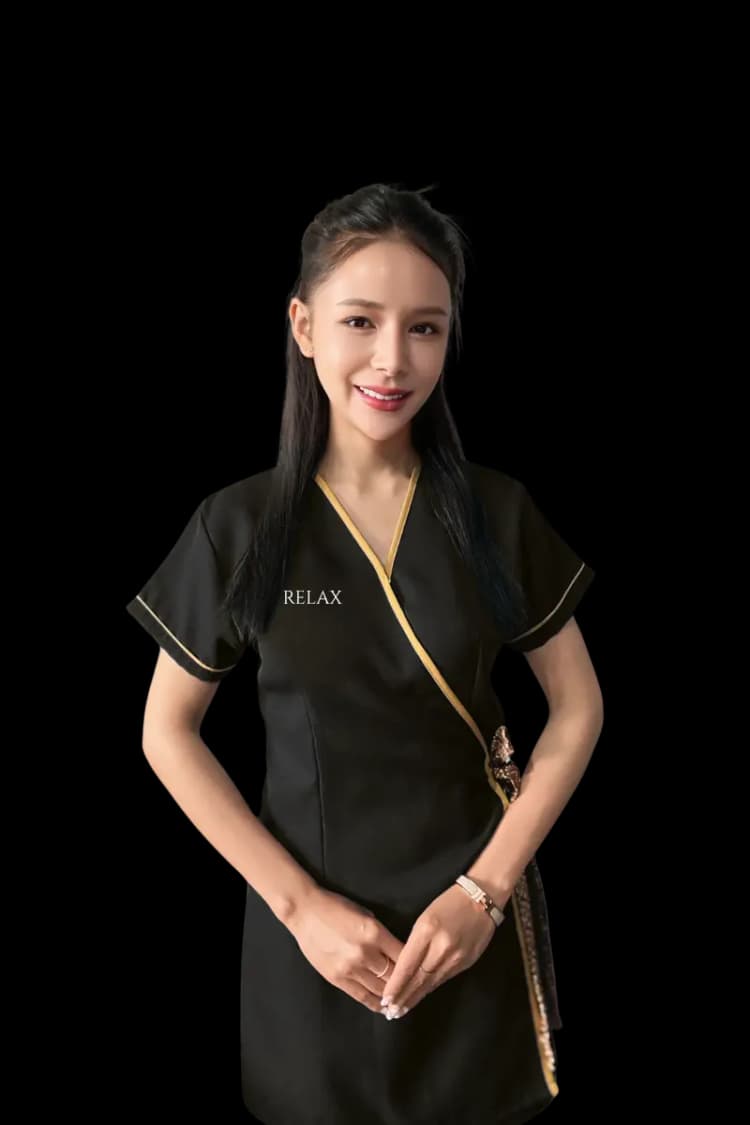
Therapists who cover Sala Daeng
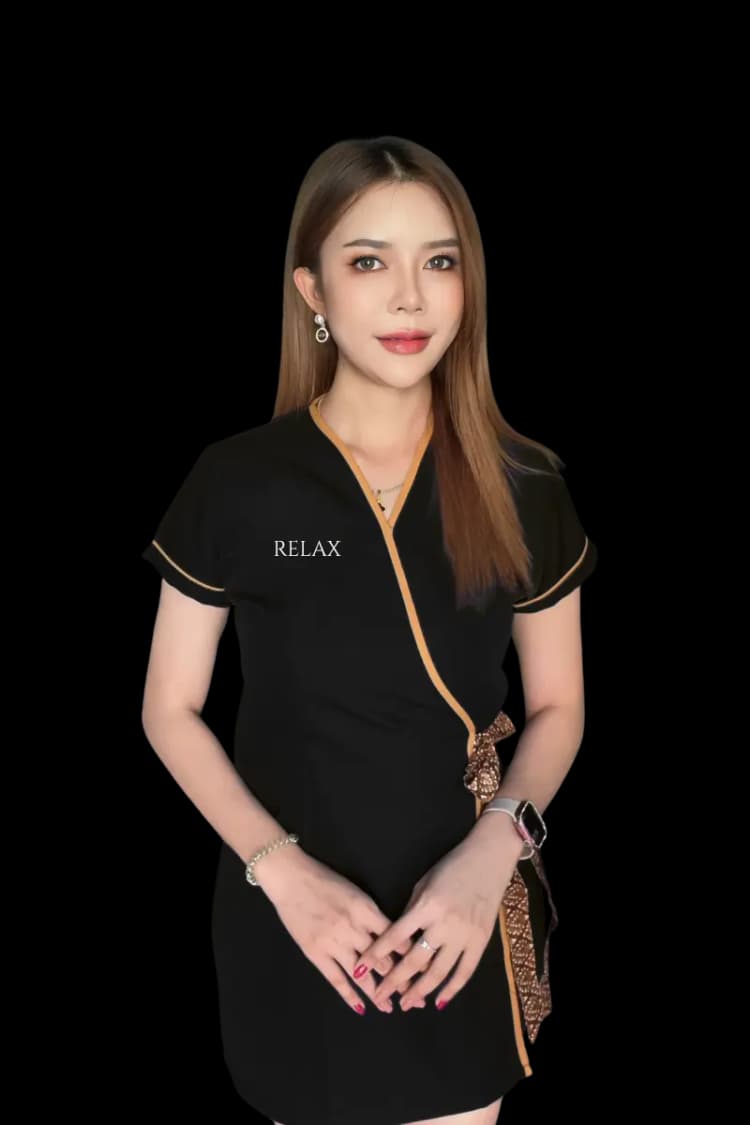
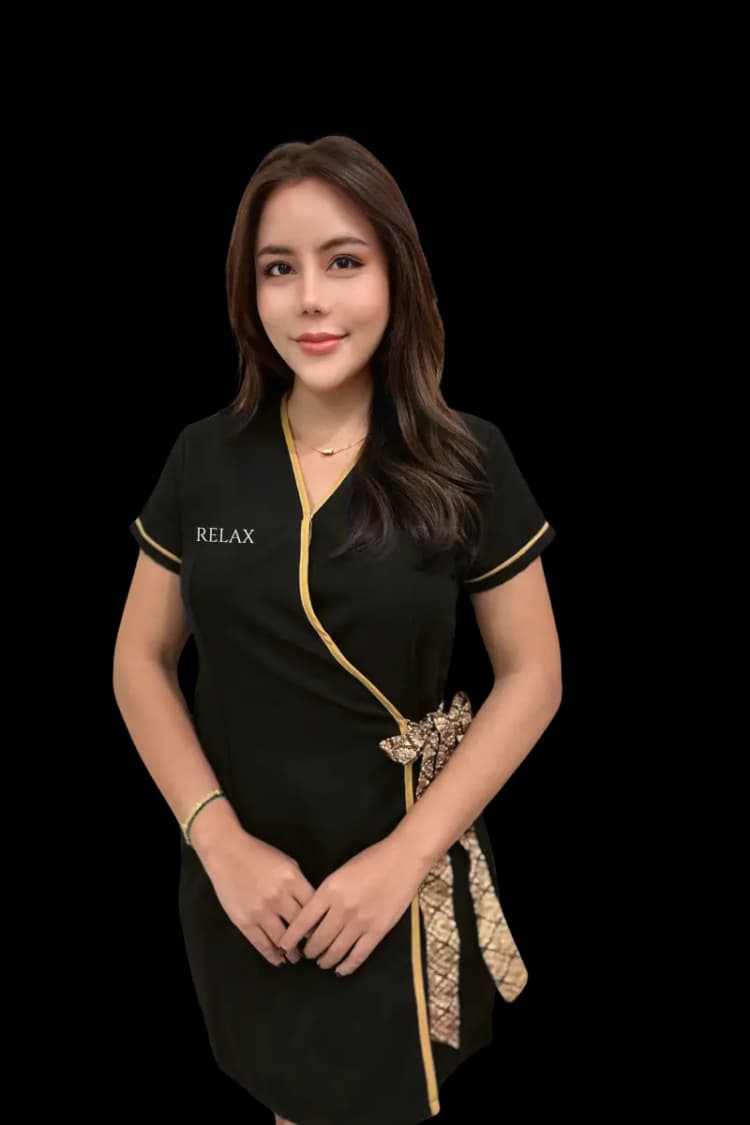
Every one of them trained in Thailand and holds a Ministry of Public Health licence. You get told who is coming before they knock.

Getting the address right at a busy junction
Sala Daeng is compact, which makes it easy, but the junction itself is confusing enough to be worth a few words.
Name the street rather than the station. Convent, Thaniya and Sala Daeng are three different directions from the same corner and the station name alone does not distinguish them.
Say which end of Convent you are on. It runs a fair distance south toward Sathorn and the far end is closer to that road than to this station.
For a hotel, the name is enough. The properties around this junction are large, individually named and well known, and no further detail is needed.
For a residential block, add the floor and keep your phone to hand. The older buildings here use an intercom rather than a staffed desk, and a call that rings out is the main cause of delay in this district.
If you are actually across Rama 4 by the park, say so. That side is Lumphini rather than Sala Daeng and it is a different walk in.
The weekday rhythm
This corner follows the financial district pattern rather than a residential one, but it holds up better at the weekend than Silom proper does, and the park is why.
Monday to Friday the evening peak runs from six to about ten, driven by offices and hotels. It is contested, and a Tuesday or Wednesday evening slot is worth booking in the morning rather than at seven.
Saturday and Sunday do not empty here in the way the middle of Silom does. The park brings people in all weekend, the hotels stay occupied, and the serviced apartments are full of residents who are not going anywhere. It is quieter than a weekday but it is not dead.
Early mornings are the genuinely quiet slot and they are easy to fill, which suits both the jet-lagged corporate traveller and anyone who has been up since five for the park.
Where Sala Daeng stops
This is a small district hemmed in by larger ones, so the edges come up quickly.
West along Silom
Westward along Silom the offices continue and the character becomes the main Silom page rather than this one, roughly from Soi 9 onward.
South down Convent
Southward, Convent Road runs down to Sathorn, and buildings at that end sit as comfortably on the Sathorn page as on this one. Use whichever road you actually walk out onto.
North across Rama 4
Northward across Rama 4 is Lumphini Park itself and, beyond it, the Ratchadamri and Ploenchit areas. Those are covered separately and the walk across the junction is longer than it looks.
East to Lumphini MRT
Eastward toward Lumphini MRT the buildings shade into the Sathorn and Khlong Toei pages. Anywhere past the park corner is better served by those.
Prices, and the hotel spa comparison
Every hotel around this junction has a spa, several of them very good ones, and the most common question we get here is what the difference actually is.
The honest answer on treatment is not very much. A licensed Thai therapist doing sixty minutes of deep tissue is doing the same work whether the room is a spa treatment room or your own. The differences are the setting, the shower afterwards, and the price.
On price the gap is substantial. A hotel spa in this district will typically charge two to three times our rate for a comparable hour, and a treatment arranged through the concierge to your room usually carries a service charge and VAT on top of the headline figure. Our price list is one figure for the whole city and does not change with the address.
What a spa gives you that we do not is the facility: the steam room, the pool, the hour of sitting about afterwards. If that is what you want, book the spa. If you want the treatment in your own room without the surcharge, that is what this is.
Everywhere we go in Sala Daeng
Find yours below. If it is not here we almost certainly still come, so send the building name and we will confirm in a minute.
Stations
- BTS Sala Daeng
- MRT Si Lom
- MRT Lumphini
- BTS Chong Nonsi
- BTS Ratchadamri
Streets and sois
- Soi Convent
- Soi Thaniya
- Soi Sala Daeng
- Silom Road
- Rama 4 Road
- Soi Sala Daeng 1
- Soi Sala Daeng 2
- Phra Ram 4 junction
Landmarks
- Lumphini Park
- Silom Complex
- Dusit Thani corner
- Bangkok Christian Hospital
- Saint Joseph Convent School
- Thaniya Plaza
- Sala Daeng interchange
Buildings we travel to
Listed as places we deliver to. We have no arrangement with any of them and nothing here should be read as one.
Hotels
- Dusit Thani Bangkok
- Crowne Plaza Bangkok Lumpini Park
- Le Meridien Bangkok
- Holiday Inn Bangkok Silom
- Montien Hotel Surawong
- Narai Hotel
Condominiums and residences
- Saladaeng Residences
- The Legend Saladaeng
- Baan Siri Silom
- Silom Suite
- Sathorn Gardens
Who books in Sala Daeng
- Japanese corporate secondments
- The serviced apartments behind Thaniya. Long postings, traditional Thai requested by name, and language asked about up front.
- Lumphini runners and cyclists
- Deep tissue on the legs rather than the back, which is the reverse of every other district on this list.
- Office workers
- The towers along Silom. Weekday evenings, neck and upper back, booked from six onward.
- Corporate hotel guests
- Late aromatherapy before an early start, and the standard business district pattern.
- Early risers
- Six and seven in the morning, easy to fill, and split between jet lag and the park loop.
- Weekend park visitors
- The reason this corner does not empty on a Saturday the way the middle of Silom does.
Questions about Sala Daeng
Do any of your therapists speak Japanese?
I run in Lumphini. Which treatment is right?
Should I book straight after a run?
Convent, Thaniya or Sala Daeng. Does it matter which I say?
How does this compare with the hotel spa downstairs?
Is the weekend quiet here like the rest of Silom?
Is there space for traditional Thai in a serviced apartment here?
How late does this corner stay busy?
My building uses an intercom rather than a desk. What happens?
Near Sala Daeng
Silom
The old financial district. Packed on a Tuesday, deserted on a Sunday.
Sathorn
Embassies, corporate towers and the densest run of five-star rooms in Bangkok.
Chong Nonsi
Where Silom and Sathorn cross. Newer towers, and the tallest building in the city above them.
Khlong Toei
The port and the market on one side, brand new Rama 4 towers on the other.
Surasak
The quiet western end of the business district, where the towers thin out and the old shophouses begin.
A therapist to your door in Sala Daeng
Message us with the building name and a time. Nothing is taken up front, and you pay the therapist when she has finished.