
Massage in Yaowarat, to your door
Yaowarat is the oldest continuously inhabited commercial district in Bangkok and the hardest to find an address in, which is why this page is mostly about the lanes.
- Arrival35 to 55 minutes
- Hours24 hours, every day
- TherapistsLicensed, named first
- FromTHB 900, pay after
The oldest district in the city, and the hardest address in it to find.
Yaowarat Road runs through the middle of Bangkok's Chinatown, a district that has been continuously settled and continuously trading since the late eighteenth century, and the street pattern reflects every one of those years.
What Yaowarat books most
Ordered by what people here actually choose, rather than by our menu. Every one is worked on your own bed with sheets and oil the therapist brings with her.

Traditional Thai massage
Stretching and acupressure along the body's energy lines, worked through clothing without oil. Firm, and on tight muscles it can smart. Worked on your bed, so there is nothing to clear.
Details
Deep tissue massage
Slower and heavier than an oil massage, aimed at the knots underneath rather than the surface. Say the word at any point and she eases off.
Details
Relaxing oil massage
Long, even strokes with warm unscented oil. The most straightforward thing on the menu, and the one to pick if you simply want the tension gone.
Details
Coconut oil massage
Cold-pressed coconut oil rather than the standard blend. Lighter on the skin, absorbs rather than sitting on top, and it is what most Thai therapists use on themselves.
Details
Aromatherapy massage
The same slow work as an oil massage, with a scented blend chosen for what you need. Lemongrass to wake up, lavender to sleep. Most people book this one at night.
Details
Office syndrome massage
Targeted work on the neck, shoulders and upper back for people who sit at a desk all day. The one to book if your pain has a laptop-shaped cause.
DetailsIt is a district of gold shops, herbal medicine sellers, dried goods wholesalers, small workshops and family businesses, most of them in shophouses that have been in the same family for generations. Above and behind them people live, in a density that has no equal in the city.
At night the main road becomes one of the best known street food destinations in Asia, with stalls setting up along the pavements from early evening and running past midnight. That brings a very large number of visitors into a district that is otherwise almost entirely local.
The MRT reaches it now at Wat Mangkon, which has changed the accessibility considerably. Before that this was one of the least rail-connected central districts in Bangkok, and much of it still is once you are off the main roads.
For us Yaowarat is the hardest district in the city to deliver to, and being straightforward about that is more useful than pretending otherwise. We come, and the address needs to be right.
The lanes, and why an address here is different
In most of Bangkok a building name and a soi number will do. In Yaowarat neither exists reliably, and it is the one district where we routinely ask for three separate pieces of information.
The lanes here are old, extremely narrow and frequently unnamed. Many are too tight for a car and some are too tight for a motorcycle. Several are covered, several are effectively private passages through buildings, and a good number do not appear on any mapping application at all.
House numbering is inconsistent because it accumulated over two centuries rather than being planned. Numbers on the same lane are not necessarily sequential and plates are frequently missing or illegible.
So what works is the lane as best you can describe it, a landmark that is genuinely fixed, and a pin. The landmark matters most: a temple, a shrine, a school, a well-known gold shop or a specific restaurant. This is a district of small, distinctive, long-established places and they are what people actually navigate by.
Send the lane, a landmark and a pin. In this district you genuinely need all three.
The last stretch on foot
Almost every booking in this district ends with a walk, and it is worth setting expectations about that rather than surprising anybody.
Where the vehicle stops
A car or a motorbike taxi will get to the nearest road that takes vehicles, which in the older parts of the district may be several hundred metres from your door.
The walk in
She walks the rest, carrying oil and linen. That is entirely normal here and it is built into the arrival window rather than being an inconvenience she is doing you a favour over.
First visits
For a first visit, meeting her at the landmark you named is genuinely the fastest option. It costs you three minutes and saves considerably more, and in a district of unnamed lanes it removes all the guesswork at once.
After that
After the first visit it stops being an issue. She has walked the route and will find it directly next time, which is why the regulars here never have this problem.
What Yaowarat books
Traditional Thai, overwhelmingly
Traditional Thai dominates here more than in any other district we cover. The population is Chinese Thai and has been for generations, the stretching is simply what a massage is, and it is asked for by name without any reference to a menu.
Deep tissue from the trades
Deep tissue arrives from the working side of the district, which is most of it. Gold shops, wholesale goods, small workshops and market trade all produce hands, forearms, shoulders and lower back complaints from repetitive physical work.
Oil massage in the hotels
Straight oil massage comes from the boutique hotels and hostels that have opened here over the last decade, whose guests are visitors rather than residents.
Bookings for older family members
A high share of bookings are made by an adult child for an elderly parent living in the same building. Multi-generation households are the norm here, and for an older person we almost always recommend a gentle oil massage rather than the stretching.
Shophouse living, and the room
Most residential space here is the upper floors of a shophouse, and these are among the oldest buildings we work in anywhere in the city.
They are tall, narrow and deep, typically three or four storeys with a business at street level. The stairs are steep and there is never a lift. Tell us the floor when you book, because she is carrying her oils and linen up them.
Space upstairs is often tighter than in a modern flat, and rooms are frequently used for storage as well as living. None of that changes what you can book. Every treatment is worked on the bed, traditional Thai included, so a room with boxes along one wall takes the full menu as long as she can stand along one side of the mattress.
The street door is the other point. If the business downstairs has closed for the night the shutter is down, there is often no bell, and somebody has to come and open it. In this district that is the single most common cause of a delayed arrival and it costs one line in a message to prevent.
The night food street, and its effect
From early evening the main road fills with food stalls and the pavements become effectively impassable, which lasts until well past midnight.
For an arrival this matters more than it sounds. The stalls occupy the pavement, the crowd occupies what is left, and a therapist walking in from the MRT during peak food hours moves considerably more slowly than she would at three in the afternoon.
It also closes some of the routes. Lanes that are open during the day are blocked by stall setups at night, and the walk in may take a longer way round.
None of it prevents anything. It adds ten or fifteen minutes between about seven and eleven in the evening, and we build that into the estimate. If you are booking in that window and can wait until after eleven, it will be quicker.
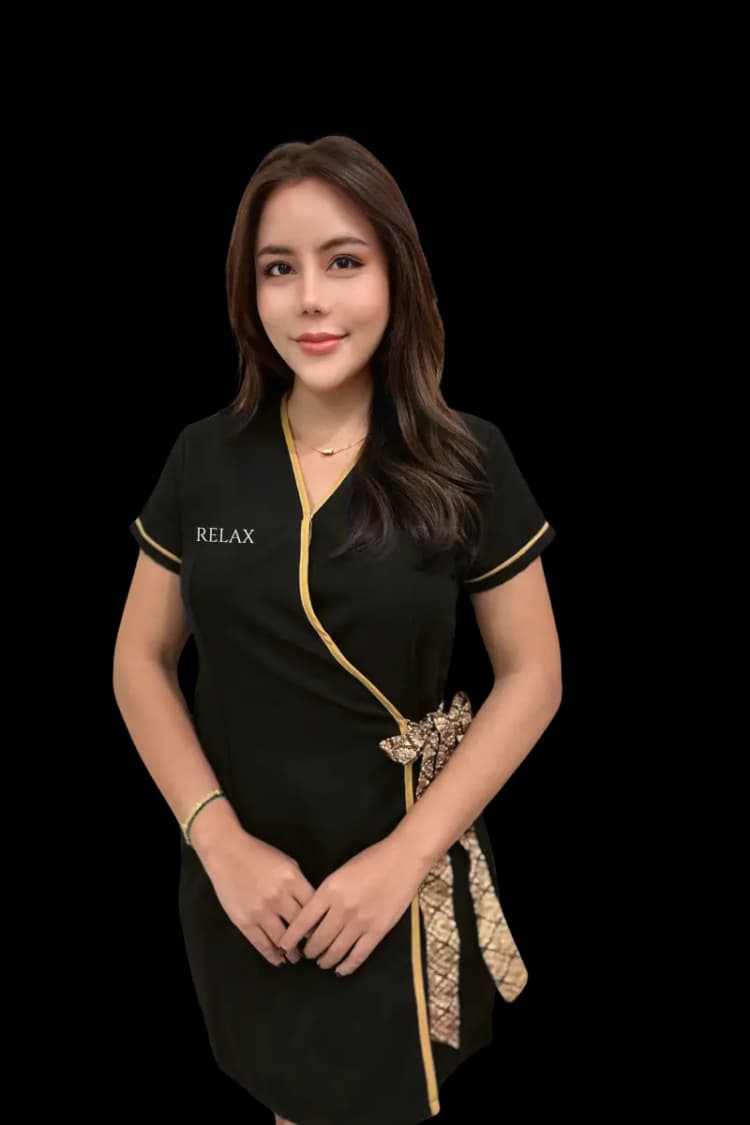
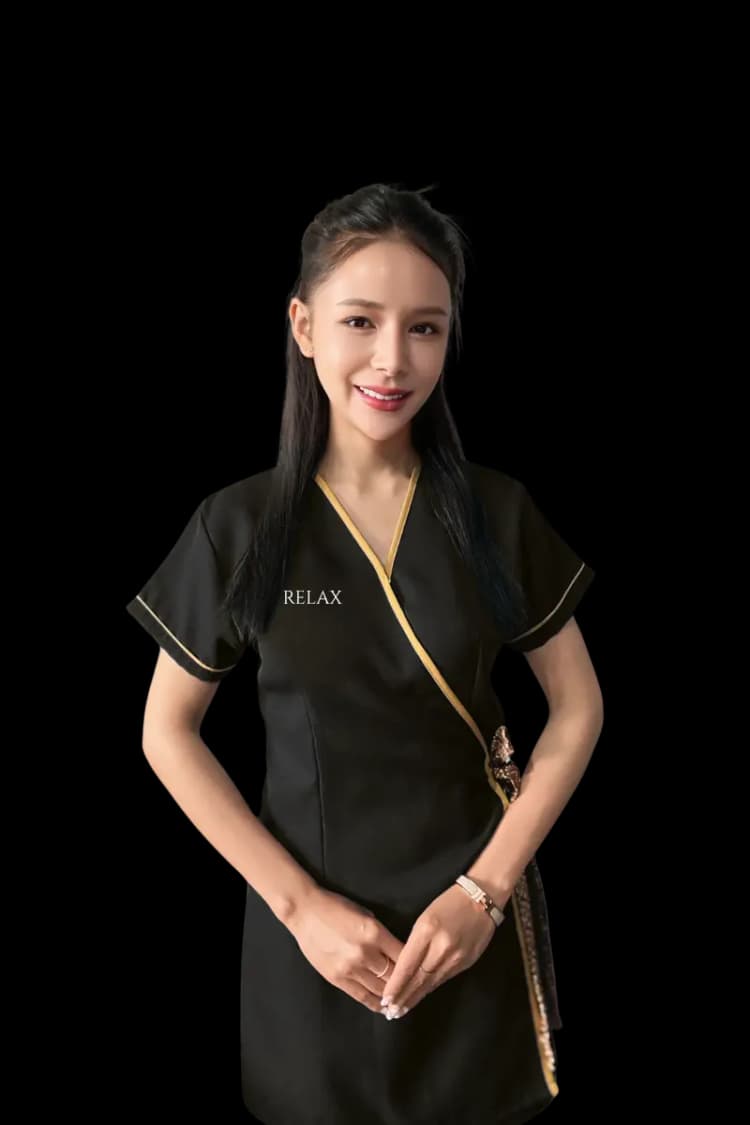
Therapists who cover Yaowarat
Every one of them trained in Thailand and holds a Ministry of Public Health licence. You get told who is coming before they knock.


Language, and the older generation
Chinatown has a long-settled Chinese Thai population, and language comes up here in a way it does not in the newer Chinese community out at Huai Khwang.
Most residents here speak Thai as a first language, so a booking is straightforward and no different from anywhere else in the city.
Older family members may be more comfortable in Teochew or Mandarin. Every therapist speaks Thai and working English, and some speak Mandarin. Say what is needed and we will tell you honestly who is available at the hour you want.
For a booking made on behalf of a parent or grandparent, it is worth being in the building for the first visit. Not in the room, but present, so the introduction is easy and somebody can answer a question the therapist would otherwise have to guess at.
Tell us the age and anything medical. For an older person in a shophouse we would nearly always recommend the gentle oil massage worked on a bed rather than the floor stretching, whatever the rest of the household books.
The hotels, and the visitor side
A visitor economy has grown here over the last decade and it now supplies a meaningful share of our bookings in the district.
Boutique hotels
Boutique hotels in converted shophouses and old commercial buildings are the largest group. Small, individual, frequently beautiful, and considerably easier to find than a residential address because they have signs and are used to people arriving.
Hostels
Hostels serve a younger crowd and are the most relaxed buildings here, with nobody asking anything of a visitor.
The riverside edge
Toward the river and Talat Noi the accommodation blends into what the Charoen Krung page covers, and either page will serve you.
Access
Access to any of these is straightforward compared with a shophouse apartment. Give the hotel name and she will find it without the landmark and pin routine.
Parking, deliveries and the middle of the day
Yaowarat has a daytime congestion problem that is quite separate from the evening food crowd, and it is worth knowing about if you are booking between about ten and four.
This is a wholesale district, and wholesale means deliveries. Goods arrive all day on trucks, handcarts and motorcycles, and the narrow lanes fill with stock being moved in and out of shops. A lane that is walkable at eight in the morning can be genuinely blocked at noon.
It does not stop an arrival, since she is on foot for the last part anyway, but it slows the walk in and it occasionally means taking a longer route around a blocked passage.
The quietest windows here are early morning, before about nine, and late evening after the food stalls have packed up. Both are good times to book if you have the flexibility, and the early one in particular is genuinely quick.
Where Yaowarat ends
Southward it runs into Talat Noi and then Charoen Krung, and the boundary between them is genuinely blurred. Whichever road your door actually opens onto is the page you want.
Westward it heads toward Pahurat, the fabric district and the old city proper, an area of similar density and similar navigational difficulty.
Northward it reaches Hua Lamphong and the old railway station, and beyond that toward the Rama 4 corridor and Sam Yan.
Eastward it becomes the Chinatown fringe and then the older commercial streets running toward Si Phraya and the river.
The whole quarter is compact by area and dense by population, so all of these edges are within a short walk of each other and any of the neighbouring pages may describe your building.
Price, and a district that negotiates
Yaowarat is a trading district where negotiation is the ordinary way business is conducted, and we are asked about it here as often as at Pratunam. The answer is the same and it deserves an explanation.
One published price applies across the whole city and it does not move for the district, the hour, or how difficult the address is to reach. A fourth floor shophouse down an unnamed lane at eleven at night costs exactly what a hotel room at Asok costs.
That means there is no surcharge for the walk in, which in this district is the thing people most expect to be charged for. It also means the figure does not come down, which in a trading quarter is a deliberate choice rather than an oversight.
Nothing is taken when you book, no deposit is held, and payment happens at the end in cash, by card or by PromptPay. The amount is whatever the confirmation message said it would be.
Everywhere we go in Yaowarat
Find yours below. If it is not here we almost certainly still come, so send the building name and we will confirm in a minute.
Stations
- MRT Wat Mangkon
- MRT Hua Lamphong
- MRT Sam Yan
- Ratchawong Pier
- Si Phraya Pier
- MRT Sanam Chai
Streets and sois
- Yaowarat Road
- Charoen Krung Road
- Soi Wanit 1 (Sampeng Lane)
- Soi Wanit 2
- Ratchawong Road
- Mangkon Road
- Plaeng Nam Road
- Songwat Road
- Songsawat Road
Landmarks
- Wat Traimit
- Wat Mangkon Kamalawat
- Sampeng Lane
- Talat Noi
- Yaowarat night food street
- Hua Lamphong station
- Ratchawong Pier
- Chinatown Gate
Buildings we travel to
Listed as places we deliver to. We have no arrangement with any of them and nothing here should be read as one.
Hotels
- Shanghai Mansion Bangkok
- Grand China Hotel
- Hotel Royal Bangkok Chinatown
- Ba Hao Residence
- Loftel 22 Hostel
- Chinatown Hotel Bangkok
Condominiums and residences
- Yaowarat shophouse apartments
- Songwat residences
- Talat Noi conversions
- Chinatown loft apartments
Who books in Yaowarat
- Multi-generation households
- The defining pattern here. Several people in one shophouse, and frequently a booking made for the oldest of them.
- Shop and workshop traders
- Gold, dried goods, wholesale and small manufacturing. Hands, forearms and lower back from repetitive work.
- Boutique hotel guests
- Converted shophouses and old commercial buildings. Easier to find than a residential address and growing every year.
- Hostel guests
- The youngest crowd in the district and the most relaxed buildings we visit here.
- Night market workers
- The food street runs past midnight, and the bookings from it come afterwards.
Questions about Yaowarat
Will you actually come down the lanes here?
What exactly do you need for the address?
Should I meet her somewhere for a first booking?
I live above a shop that shuts at night. What happens?
Is there room for traditional Thai in a shophouse?
Does the night food street slow things down?
My grandmother speaks Teochew rather than Thai. Is that a problem?
Is there a surcharge because the address is hard?
Near Yaowarat
Charoen Krung
The oldest paved road in the country, and the creative quarter that has grown back into its old shophouses.
Riverside
The grand hotels on the Chao Phraya. Almost entirely visitors, and the boat is the road.
Khao San
The backpacker quarter. Cheap beds, no rail line, and a street that does not sleep.
Silom
The old financial district. Packed on a Tuesday, deserted on a Sunday.
Thonburi
The far bank. A river to cross, canals behind it, and half the rent of the other side.
A therapist to your door in Yaowarat
Message us with the building name and a time. Nothing is taken up front, and you pay the therapist when she has finished.