
Massage in Silom, to your door
Silom is the old financial district, and it is the only part of Bangkok that genuinely empties at the weekend. That single fact changes when it is worth booking here.
- Arrival20 to 40 minutes
- Hours24 hours, every day
- TherapistsLicensed, named first
- FromTHB 900, pay after
The only district in Bangkok that is quieter on a Sunday than a Tuesday.
Silom Road runs from Lumphini Park in the east down to the river at Charoen Krung, and for most of the twentieth century it was where Bangkok did its business. The banks are still here, along with the insurance headquarters, the law firms and the trading houses, and on a weekday morning the pavements carry a volume of office workers that nowhere else in the city matches.
What Silom books most
Ordered by what people here actually choose, rather than by our menu. Every one is worked on your own bed with sheets and oil the therapist brings with her.

Deep tissue massage
Slower and heavier than an oil massage, aimed at the knots underneath rather than the surface. Say the word at any point and she eases off.
Details
Office syndrome massage
Targeted work on the neck, shoulders and upper back for people who sit at a desk all day. The one to book if your pain has a laptop-shaped cause.
Details
Aromatherapy massage
The same slow work as an oil massage, with a scented blend chosen for what you need. Lemongrass to wake up, lavender to sleep. Most people book this one at night.
Details
Relaxing oil massage
Long, even strokes with warm unscented oil. The most straightforward thing on the menu, and the one to pick if you simply want the tension gone.
Details
Four hands massage
Two therapists working on you at once, in time with each other. Strange for about a minute, then very hard to think about anything at all.
Details
Traditional Thai massage
Stretching and acupressure along the body's energy lines, worked through clothing without oil. Firm, and on tight muscles it can smart. Worked on your bed, so there is nothing to clear.
DetailsTwo rail lines serve it. BTS Sala Daeng sits at the eastern end and Si Lom MRT is directly below it, with BTS Chong Nonsi and Surasak further west along the road. That makes the whole length of Silom reachable without ever getting into a car, which matters more here than in most districts.
The accommodation is a mix that exists nowhere else. Large business hotels aimed at corporate travellers, a run of older residential blocks on the sois off the main road, serviced apartments let by the month to people on secondment, and a scattering of newer condominium towers wedged into whatever land came free.
What defines the district for us is the weekend. On a Saturday the offices are shut, the lunch places are closed, and the population drops by something close to an order of magnitude. Almost nowhere else in Bangkok does that, and it inverts everything about when we are busy here.
Numbered sois run off Silom Road on both sides, and a few of them carry names instead: Convent, Thaniya, Pipat. Those names are used far more than the numbers, so it is worth giving both when you book.
The weekend inversion, and how to use it
Every residential district in this city is busiest at the weekend. Silom is the exact opposite, and the difference is stark enough to plan around.
Monday to Friday, this district books hard from about six in the evening. Corporate travellers finishing meetings, office workers who have not left the building since nine, and hotel guests who came in for a conference. Between seven and ten on a weekday the evening slots here are among the most contested in the city.
From Friday night it drains. Saturday is quiet, Sunday quieter still, and the only bookings are from the hotels and the residential sois. That makes the weekend the easiest time in Bangkok to get a same-hour treatment in Silom, and frequently the easiest time to get a specific therapist.
The practical advice follows directly. If you are here on business, book your weekday evening slot in the morning rather than at seven. If you are here at the weekend, book whenever you like and expect it to be straightforward. If you live here and can move your regular treatment to a Sunday, you will get a better choice of therapist for it.
Saturday is the easiest day of the week to get a therapist here at no notice. Tuesday at eight is the hardest.
Hotels, and the corporate pattern
Four kinds of building take bookings in this district, and the front desk behaves differently in each.
The large business hotels
The large business hotels along Silom and around Sala Daeng are the most formal front desks we deal with anywhere. Written visitor procedures, identification at reception, a call to the room. Entirely predictable and entirely routine; these hotels handle visitors all day.
Boutique and mid-range
The mid-range and boutique places on the sois are more relaxed and often ask nothing at all. A guest expecting a visitor is a guest expecting a visitor.
Serviced apartments
Serviced apartments are the easiest of the lot and there are a lot of them here, because so many people are in Silom on three-month and six-month postings. They exist for residents with visitors and the desk barely looks up.
Residential blocks
Residential condominiums on the sois run a visitor book and sometimes an intercom call. Older blocks in particular may have a guard rather than a reception, in which case answering your phone is the whole procedure.
What Silom books
Deep tissue and office syndrome lead
Deep tissue and office syndrome between them take more than half of what this district books, which is the highest concentration of desk-related treatments anywhere on our list. The customers are people who have spent nine hours at a screen and then two more at dinner, and the complaint is always the same: neck, upper trapezius, and the knots between the shoulder blades.
Aromatherapy, the late hotel booking
Aromatherapy is the hotel treatment and it is booked late. A corporate traveller with a seven in the morning flight is not looking for repair work; they are looking to sleep in an unfamiliar bed, and the scented blends are the right answer for that.
Traditional Thai, and the room problem
Traditional Thai underperforms here for the same reason it does at Asok. Business hotel rooms are efficient rather than large, and the floor stretch needs about two metres by one of clear space. Plenty of rooms have it and plenty do not, so ask before you book rather than after.
Four hands, and the corporate expense account
Four hands does better in Silom than almost anywhere. Two therapists at once is an expensive hour, and this is a district full of people whose company is paying for the room. It is booked from hotels rather than from the residential sois, and almost always on a weekday, which is the reverse of the couples pattern everywhere else in the city.
The named sois, and getting the address right
Silom has a numbering system and a naming system running at the same time, and the two do not always agree. It is the main source of confusion in this district.
Give both the name and the number if you know them. Soi Convent is Silom Soi 5 area to some people and its own street to others; Thaniya and Pipat have the same problem. Both together removes all doubt.
Say which side of Silom Road you are on. The road is wide, busy and has limited crossing points, so being sent to the odd-numbered side instead of the even costs real minutes rather than seconds.
Name the nearest station. Sala Daeng, Chong Nonsi and Surasak are strung along the road and any address here is close to one of them. It is the fastest way to place yourself along a road that runs for well over two kilometres.
For an office-adjacent serviced apartment, give the building name rather than the company. Several towers here are known by the business in them, and that business may have moved.
If you are near Lumphini Park at the eastern end, say so. That end shades into Sathorn and Rajadamri, and it is worth being explicit about which district you actually want.
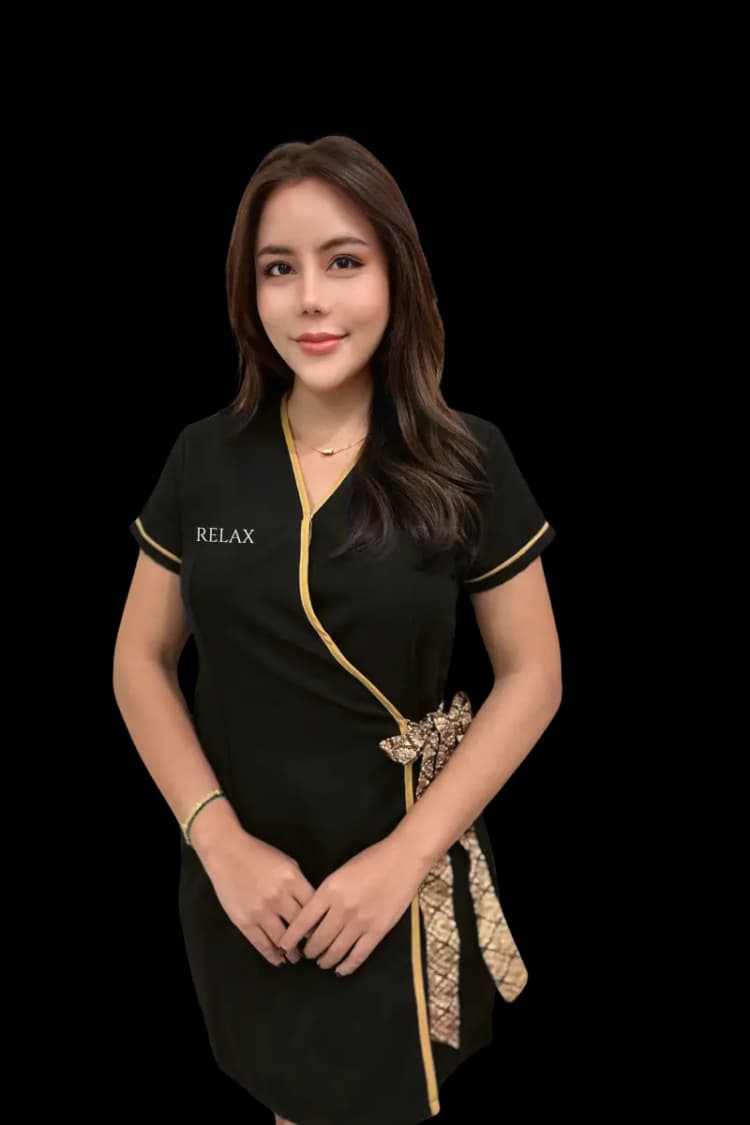
Therapists who cover Silom
Every one of them trained in Thailand and holds a Ministry of Public Health licence. You get told who is coming before they knock.



Booking around a business trip
A large share of what we do in Silom is for people who are in Bangkok for three nights and have a full diary, and that is a specific kind of booking with its own pitfalls.
Book on arrival, not on the night. Weekday evening slots in this district go, particularly Tuesday to Thursday, and deciding at eight that you want a massage at nine is how people end up disappointed. Putting the slot in when you check in costs nothing and reserves the time.
Use the morning if the evening is full. Silom mornings are quiet and available, and a seven o clock treatment before a nine o clock meeting is entirely practical. So is the gap between checking out and an evening flight, which is dead time otherwise.
Say if you have a hard stop. She will pace the treatment to finish when you need it rather than running to the full hour and leaving you rushing.
Ask for office syndrome rather than a general massage if the problem is your neck and you only have an hour. Spreading sixty minutes over the whole body when one part hurts is a waste of the hour, and this is the district where that mistake is made most often.
The eastern end and the western end
Silom Road is long enough that the two ends are genuinely different places, and the arrival window varies along it.
Sala Daeng and Convent
The Sala Daeng end is the densest and the quickest to reach, with two lines meeting and Lumphini Park across the road. Hotels, offices, and the highest concentration of evening bookings in the district.
The middle
The middle stretch is offices almost entirely, with fewer places to stay and a population that vanishes at six. There is less accommodation here than the frontage suggests.
Chong Nonsi
Chong Nonsi sits where Silom crosses Naradhiwas and is the point at which the district starts blending into Sathorn. Buildings here can reasonably claim either address.
Surasak and the river end
The western end toward Surasak and Charoen Krung is older, lower and closer to the river. Arrival takes a little longer, the buildings are more mixed, and the character is closer to the riverside pages than to the financial district.
Late bookings in a district that goes to bed
Silom has a reputation for being a late district and it is only half deserved. The offices empty at six, the restaurants finish by eleven, and the residential sois are quiet by midnight, which is earlier than most of Bangkok.
The exception is the pocket around Patpong and the streets immediately off it, which keeps going into the small hours and has done for decades. Bookings there run past two in the morning and the hotels in that pocket are entirely used to visitors at odd times.
For the rest of the district, a late booking is straightforward but not busy. If you are in a hotel at one in the morning and wondering whether anyone is working, the answer is yes and the wait is usually short, because the district itself has stopped generating demand.
Very early is genuinely quiet and genuinely available. Five and six in the morning bookings here are rare and easy to fill, which suits anybody dealing with a time zone that has not caught up yet.
Where Silom ends
Eastward, Silom finishes at Lumphini Park and the Rama 4 junction. Across the park is Lumphini proper and the Sathorn embassy quarter, and the buildings there are covered on the Sathorn page.
Southward, the sois off Silom run down toward Sathorn Road, and the two districts interleave completely along that strip. Anything between the two main roads could reasonably use either page.
Westward the road runs to Charoen Krung and the river, and the character changes noticeably as it does. Older buildings, more shophouses, and the riverside hotels. The Charoen Krung and Riverside pages describe that end better than this one.
Northward, the sois reach up toward Rama 4 and the Suan Lum area. It is a short distance and the arrival window is effectively the same as the rest of the district.
Everywhere we go in Silom
Find yours below. If it is not here we almost certainly still come, so send the building name and we will confirm in a minute.
Stations
- BTS Sala Daeng
- MRT Si Lom
- BTS Chong Nonsi
- BTS Surasak
- MRT Lumphini
- MRT Sam Yan
- BTS Saphan Taksin
Streets and sois
- Silom Road
- Soi Convent
- Soi Thaniya
- Soi Pipat
- Soi Sala Daeng
- Silom Soi 3
- Silom Soi 9
- Silom Soi 19
- Narathiwat Ratchanakharin Road
- Surasak Road
- Charoen Krung Road
Landmarks
- Lumphini Park
- Silom Complex
- Patpong Night Market
- Bangkok Christian Hospital
- Bangkok Bank Head Office
- Sala Daeng intersection
- Saint Louis Hospital
- Chulalongkorn Hospital
Buildings we travel to
Listed as places we deliver to. We have no arrangement with any of them and nothing here should be read as one.
Hotels
- Dusit Thani Bangkok
- Le Meridien Bangkok
- Holiday Inn Bangkok Silom
- Pullman Bangkok Hotel G
- Crowne Plaza Bangkok Lumpini Park
- Narai Hotel
- Montien Hotel Surawong
- Tower Club at Lebua
Condominiums and residences
- Saladaeng Residences
- The Legend Saladaeng
- Silom Suite
- Baan Siri Silom
- Klass Silom
- The Room Sathorn Pan Road
Who books in Silom
- Corporate travellers
- Three nights, a full diary, and evening slots that need booking on arrival rather than on the night.
- Office workers
- The largest weekday group. Deep tissue and office syndrome, booked from six onward.
- Secondment residents
- Serviced apartments on three and six month postings, where the front desk barely looks up at a visitor.
- Weekend hotel guests
- The only people here on a Saturday, and the reason weekends are the easiest slots in the city.
- Expense-account bookings
- Four hands and the longer treatments, almost always from a hotel and almost always on a weekday evening.
- Early risers on a time zone
- Five and six in the morning, rare across the city and easy to fill in a district that has stopped generating demand.
Questions about Silom
When is the hardest time to get a therapist in Silom?
I am here for three nights on business. When should I book?
Can I book before work rather than after?
My soi has a name, not a number. Is that a problem?
Will my business hotel allow it?
Is there space for traditional Thai in a Silom hotel room?
How late do you work here?
I only have an hour and my neck is the problem. What should I take?
Near Silom
Sathorn
Embassies, corporate towers and the densest run of five-star rooms in Bangkok.
Sala Daeng
The interchange at the top of Silom, and the Japanese business quarter behind it.
Chong Nonsi
Where Silom and Sathorn cross. Newer towers, and the tallest building in the city above them.
Surasak
The quiet western end of the business district, where the towers thin out and the old shophouses begin.
Riverside
The grand hotels on the Chao Phraya. Almost entirely visitors, and the boat is the road.
A therapist to your door in Silom
Message us with the building name and a time. Nothing is taken up front, and you pay the therapist when she has finished.