
Massage at Khao San, to your door
Khao San is the backpacker quarter of Bangkok and the largest central district with no rail station at all, which is the single fact that shapes every booking here.
- Arrival40 to 60 minutes
- Hours24 hours, every day
- TherapistsLicensed, named first
- FromTHB 900, pay after
The biggest central district with no station. Everything here arrives by road.
Khao San Road is a few hundred metres long and it has been the centre of budget travel in South East Asia for forty years. Around it, in the Banglamphu quarter, sits a dense network of guesthouses, hostels, small hotels, bars and travel agencies serving a population that turns over every few days.
What Khao San books most
Ordered by what people here actually choose, rather than by our menu. Every one is worked on your own bed with sheets and oil the therapist brings with her.
Relaxing oil massage
Long, even strokes with warm unscented oil. The most straightforward thing on the menu, and the one to pick if you simply want the tension gone.
Details
Traditional Thai massage
Stretching and acupressure along the body's energy lines, worked through clothing without oil. Firm, and on tight muscles it can smart. Worked on your bed, so there is nothing to clear.
Details
Deep tissue massage
Slower and heavier than an oil massage, aimed at the knots underneath rather than the surface. Say the word at any point and she eases off.
Details
Aromatherapy massage
The same slow work as an oil massage, with a scented blend chosen for what you need. Lemongrass to wake up, lavender to sleep. Most people book this one at night.
Details
Coconut oil massage
Cold-pressed coconut oil rather than the standard blend. Lighter on the skin, absorbs rather than sitting on top, and it is what most Thai therapists use on themselves.
Details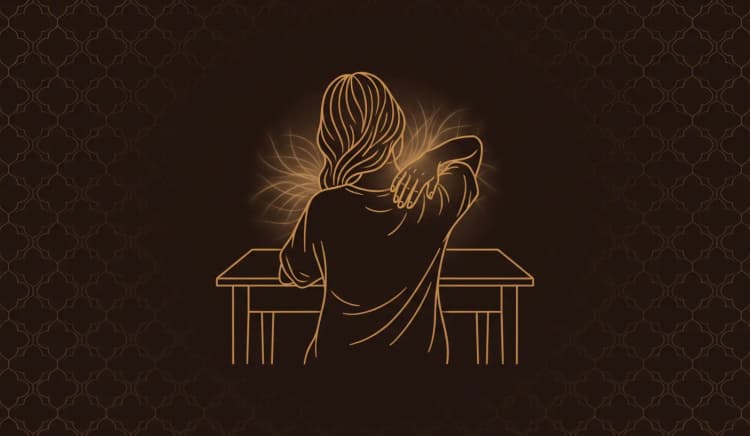
Office syndrome massage
Targeted work on the neck, shoulders and upper back for people who sit at a desk all day. The one to book if your pain has a laptop-shaped cause.
DetailsThe Grand Palace, Wat Pho and the old royal city are a short walk south, which is why the quarter grew here in the first place. Most people staying on or around Khao San are here to see the old city and then move on.
The defining practical fact is transport. There is no BTS station, and the MRT extension reaches Sam Yot and Sanam Chai rather than Banglamphu itself, so this is the largest central district in Bangkok with no rail service at its heart. Everything arrives on the road or by boat.
The accommodation is almost entirely budget and mid-range, and there is a great deal of it. Guesthouses of ten rooms, hostels with fifty beds, small hotels in converted buildings, and a scattering of newer boutique properties on the quieter streets behind.
For us this is a district of one-off bookings from visitors, at all hours, in buildings that are easy to enter and occasionally hard to tell apart.
No station, and what it costs you
Across the rest of central Bangkok our arrival estimates rest on rail. A therapist takes a train most of the way and walks the last few minutes, which is why we can quote twenty to thirty minutes in places that are several kilometres apart.
Khao San has no such option. The nearest useful stations are a genuine distance away and involve a road leg afterwards, so in practice the whole journey here is on the road, and Bangkok roads are what they are.
Forty to sixty minutes is the honest range and it does not shrink much at quiet times, because the distance itself is the constraint rather than the traffic. Late at night it improves, but not to the degree it does in the rail-served districts.
The practical consequence is that notice matters more here than almost anywhere central. An hour of warning lets us route somebody sensibly rather than sending her across the city from wherever she happens to be, and that is worth fifteen or twenty minutes.
Every other central district has a train. This one does not, and that is the whole of the arrival window.
The four streets, and telling them apart
The quarter is compact but it divides into four distinct streets, and naming the right one saves several minutes on foot.
Khao San Road
Khao San Road itself is the loudest and the most concentrated, and it is closed to vehicles for much of the evening. If you are on it after dark, expect her to walk in from one end.
Rambuttri
Soi Rambuttri curves around behind it and is quieter, greener and full of guesthouses. Many people who say Khao San are actually here.
Phra Athit
Phra Athit runs down to the river and is quieter again, with older buildings, small bars and a more local crowd. The pier here matters, since a boat is occasionally the fastest way in.
Samsen and behind
Samsen and the lanes behind hold the cheaper long-stay places and a residential population that has nothing to do with the travellers. Those addresses need a soi number.
What Khao San books
Oil massage after the temples
Plain oil massage takes the largest share on these streets, and walking is why. The old city rewards being seen on foot and most people staying here do exactly that for eight or nine hours at a stretch, which puts the complaint in the feet, calves and lower back rather than anywhere else.
Traditional Thai, requested by name
Traditional Thai is a close second and is asked for by name more than almost anywhere. People are in Thailand, frequently for the first time, and the Thai treatment is on the list of things to do. Room size is the constraint and it is worth checking.
Deep tissue for the backpack
Deep tissue arrives from people who have been carrying a large pack between cities, which produces a distinctive shoulder and upper back pattern quite unlike an office complaint.
Aromatherapy before a night bus
Aromatherapy is the night before a long journey. Overnight buses and trains leave from this part of the city, and a treatment before a twelve hour coach is a better idea than one after it.
Guesthouses, and how easy they are
The buildings here are the most relaxed we visit anywhere in Bangkok, and for a first-time customer worried about the awkwardness of an outcall booking this is the easiest district in the city to start in.
A guesthouse is typically ten to thirty rooms with a desk in the front room and the owner or a family member behind it. A visitor arriving is simply somebody arriving. Nobody registers anything, nobody calls up, and nobody asks what the visit is about.
Hostels are the same and frequently more so. The one thing worth thinking about in a hostel is the room: a treatment needs a private room with a door, so a dormitory bed will not work. If you are in a dorm, most hostels here have a private room available and it is worth asking.
Small hotels on the quieter streets run slightly more formal desks, meaning a nod and occasionally a signature. Still among the simplest buildings we deal with.
The one genuine variable is room size, which is discussed below and matters more here than the front desk ever will.
Small rooms, and which treatments fit
Budget accommodation means small rooms, and this is the district where the space question comes up most often. It is worth being direct about it.
Seven of the eight treatments happen on your bed and need only enough room to stand along one side of it. That works in essentially every room in this quarter.
Traditional Thai is the exception. The floor stretch wants roughly two metres by one of clear space, and a guesthouse room with a double bed and a wardrobe frequently does not have it.
Tell us the guesthouse and describe the room in a sentence when you book. We will say honestly whether the Thai will work or whether an oil treatment is the better use of your hour.
If you specifically want traditional Thai and the room will not take it, consider booking it on a day you move to a larger place rather than forcing it into a small one. A compromised Thai massage is worse than a good oil massage.
Nobody should feel awkward about a small room. Every therapist on the team has worked in hundreds of them and it changes nothing about the treatment except which one to choose.
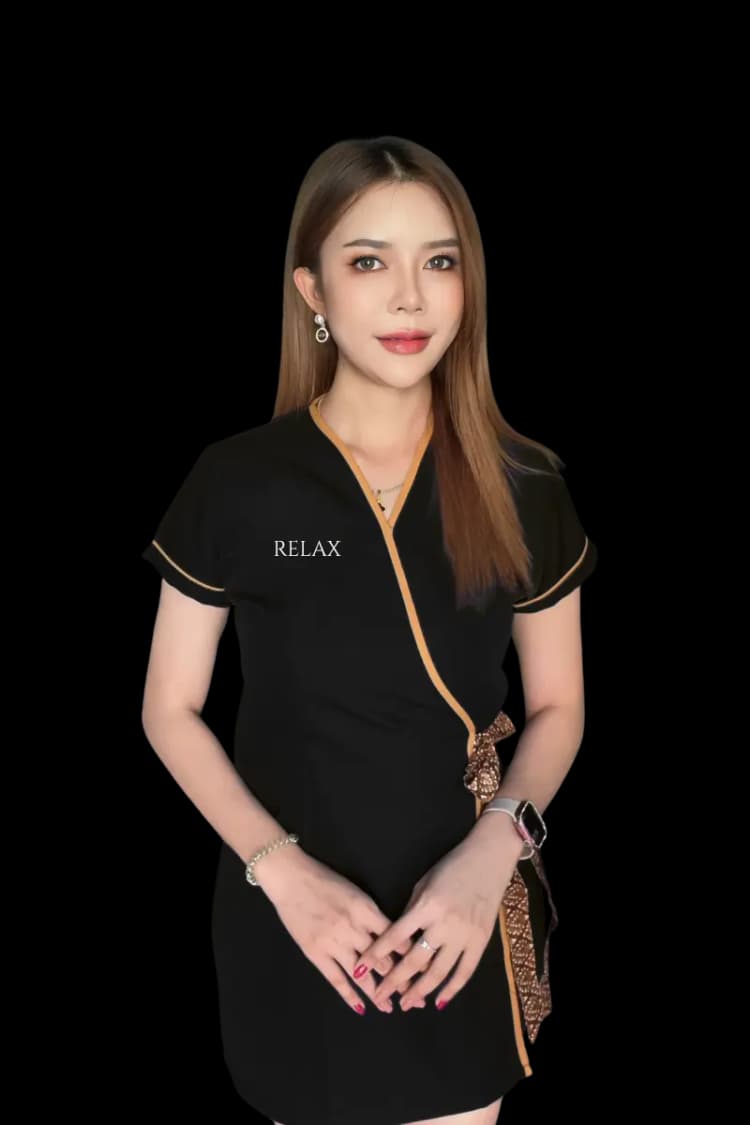
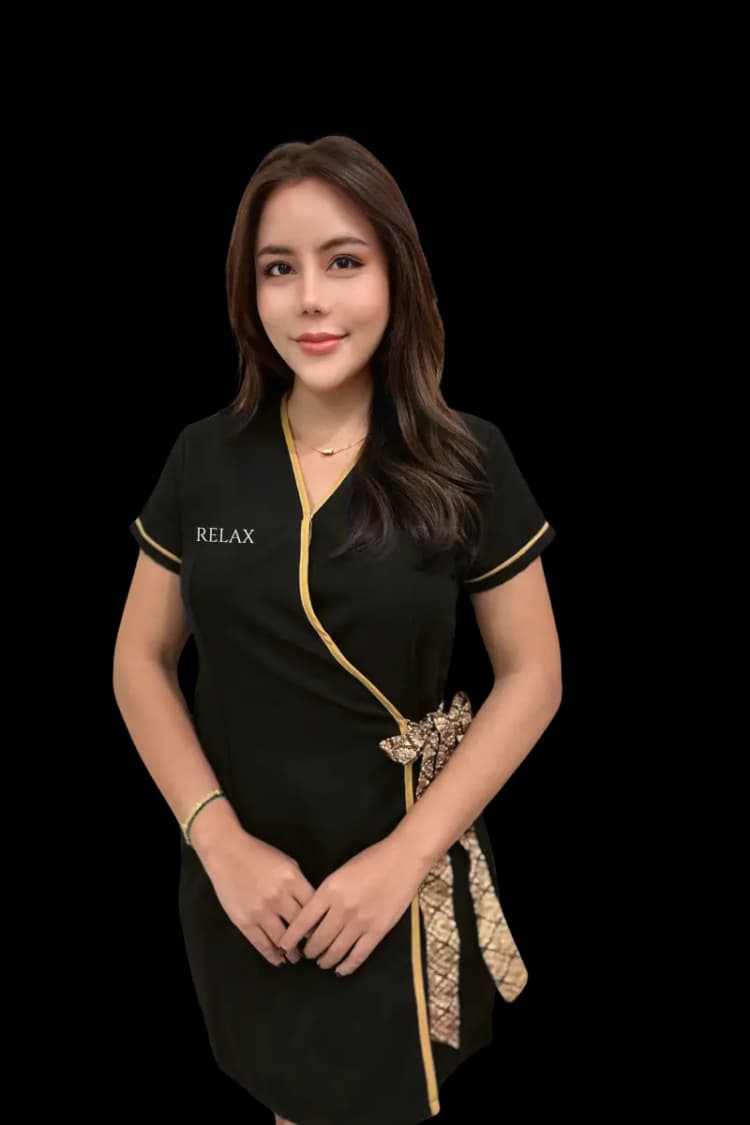
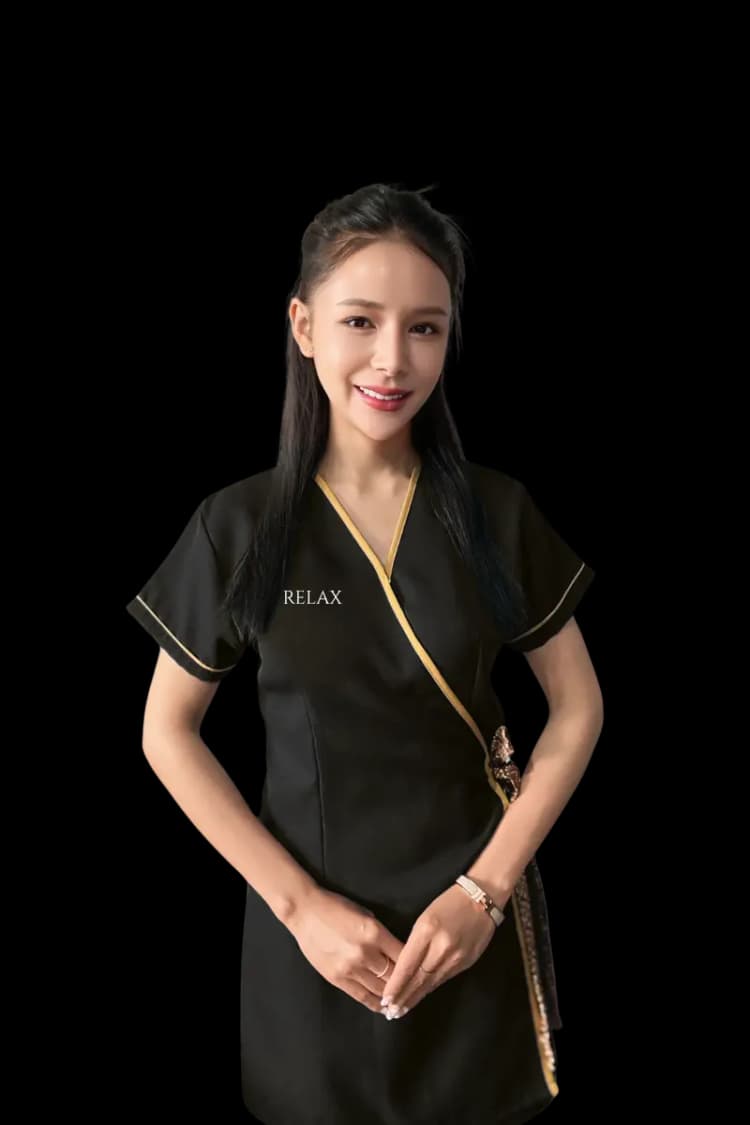
Therapists who cover Khao San
Every one of them trained in Thailand and holds a Ministry of Public Health licence. You get told who is coming before they knock.

The all-night quarter
Khao San keeps hours that almost nowhere else in Bangkok matches, and the bookings follow.
The street is busy until two or three in the morning most nights and later at the weekend, and a substantial share of our work here lands between midnight and four. That is entirely normal and the buildings are used to it.
The mornings are correspondingly dead. Almost nothing happens here before eleven, which makes late morning the easiest slot in the district to fill at no notice.
One thing worth saying plainly: a treatment after a heavy night out is a poor idea. Alcohol makes the pressure feedback a therapist relies on unreliable, and the odds of waking up sore go up considerably. If you have had a big evening, book for the next afternoon instead and it will be a much better hour.
Booking around a bus or a train
This quarter is a transit hub as much as a destination, and a good share of bookings here sit either side of a long journey.
Before a night bus
Before an overnight bus is the best use of a treatment. Twelve hours in a coach seat is coming, and an hour spent on the legs and lower back beforehand makes a real difference to how you arrive.
After arriving
After arriving off one, choose a plain oil massage rather than anything deep. A body that has been immobile in a seat all night is stiff and swollen rather than knotted, and heavy pressure is the wrong response.
Early departures
For an early departure, take the treatment the evening before rather than in the morning. Rushing an hour before a bus leaves is worse than not having it.
The timing
Whatever the journey, book with an hour of slack. This district has no rail connection and the arrival window is genuinely forty to sixty minutes.
The boat, and the fastest way in
Phra Athit pier sits at the western edge of this quarter and connects to the Chao Phraya express boat, which is a genuinely useful route into a district that has no train.
For an arrival it occasionally makes a real difference. A therapist coming from the Sathorn, Silom or riverside direction can take the boat up the river rather than crossing the old city on the road, and the boat does not sit in traffic. That is why an arrival here sometimes lands well inside the estimate for no visible reason.
The service does not run all evening, which is the limitation. It finishes long before this quarter does, so any booking after about seven is on the road regardless of where she starts from.
None of this requires anything from you beyond naming Phra Athit if that is the street you are on. It explains why the window here is wider than in most districts: the same journey has two quite different routes depending on the hour.
Where the quarter ends
Southward it runs toward the Grand Palace, Wat Pho and the old royal city, which is a short walk and mostly temples and government buildings rather than accommodation.
Westward it reaches the river at Phra Athit, where the pier connects to the express boat and across to Thonburi. That page covers the far bank.
Northward is Samsen and the older residential quarter beyond it, which is genuinely local and considerably quieter than the streets around Khao San.
Eastward it heads toward Democracy Monument and then the Chinatown fringe, and the Yaowarat page picks up from about there.
The whole quarter is walkable end to end in fifteen minutes, so all of these edges are close, and any of the neighbouring pages may describe your building better if you are on the boundary.
Price, and a budget district
Khao San runs on a budget and we are asked about price here as often as anywhere in the city, so it is worth being clear about what the figures are and are not.
One published treatment price applies across every district. Sixty minutes of oil massage is a thousand baht here exactly as it is in a riverside suite, and the length of the run into the old city shows up in the arrival window rather than in what the massage costs.
We are not the cheapest massage available in this quarter and we would not pretend to be. There are shopfronts on these streets charging less. What we do is bring a licensed therapist with her own fresh sheet, towels and oil to your room at any hour, and the price does not change with the hour or the address.
Nothing is taken when you book, there is no deposit, and there is no minimum. Payment happens at the end in cash, by card or by PromptPay, and it is the amount in your confirmation message.
Everywhere we go in Khao San
Find yours below. If it is not here we almost certainly still come, so send the building name and we will confirm in a minute.
Stations
- MRT Sam Yot
- MRT Sanam Chai
- Phra Athit Pier
- Chao Phraya Express Boat
- BTS National Stadium
- MRT Hua Lamphong
Streets and sois
- Khao San Road
- Soi Rambuttri
- Phra Athit Road
- Samsen Road
- Tanao Road
- Chakrabongse Road
- Soi Chana Songkhram
- Phra Sumen Road
Landmarks
- Khao San Road
- Grand Palace
- Wat Pho
- Wat Chana Songkhram
- Phra Athit Pier
- Democracy Monument
- Santichaiprakarn Park
- Banglamphu Market
Buildings we travel to
Listed as places we deliver to. We have no arrangement with any of them and nothing here should be read as one.
Hotels
- Riva Surya Bangkok
- Buddy Lodge
- Villa Cha Cha
- Rambuttri Village Inn
- Nap Park Hostel
- D&D Inn
- Casa Nithra Bangkok
Condominiums and residences
- Banglamphu apartments
- Samsen long-stay guesthouses
- Phra Athit conversions
Who books in Khao San
- Backpackers
- First time in Thailand, a day of temples behind them, and the treatment booked on the way back.
- Long-haul travellers
- Carrying a large pack between cities, which produces a shoulder and upper back pattern unlike a desk complaint.
- Night bus passengers
- Twelve hours in a coach seat either behind them or ahead. The treatment works better beforehand.
- Late night bookers
- Between midnight and four, which this quarter produces more of than anywhere except Huai Khwang.
- Samsen residents
- The local population behind the traveller streets, quieter and booking on ordinary hours.
Questions about Khao San
Why does it take longer to reach Khao San than other central districts?
Will a guesthouse let a therapist come to my room?
I am in a hostel dormitory. Can I book?
My room is tiny. Which treatment should I choose?
I have an overnight bus tonight. Before or after?
Can I book after a night out on the street?
How late can I book here?
Are you the cheapest option on this street?
Near Khao San
Yaowarat
Chinatown. The oldest, densest and most difficult district to navigate that we cover.
Thonburi
The far bank. A river to cross, canals behind it, and half the rent of the other side.
Riverside
The grand hotels on the Chao Phraya. Almost entirely visitors, and the boat is the road.
Charoen Krung
The oldest paved road in the country, and the creative quarter that has grown back into its old shophouses.
Ratchathewi
One stop from Siam and half the rent. The canal, the guesthouses and the cheapest central beds.
A therapist to your door in Khao San
Message us with the building name and a time. Nothing is taken up front, and you pay the therapist when she has finished.