
Massage on Rama 3, to your door
Rama 3 follows the curve of the river south of Sathorn, and it is the largest district in central Bangkok with no rail station anywhere on it.
- Arrival40 to 65 minutes
- Hours24 hours, every day
- TherapistsLicensed, named first
- FromTHB 900, pay after
A river curve, three malls, and not one station along the whole road.
Rama 3 Road follows the great bend of the Chao Phraya south of Sathorn, running from the Yannawa area round to Rat Burana, and along most of its length it is faced on one side by the river and on the other by a dense wall of condominium towers, offices and shopping centres.
What Rama 3 books most
Ordered by what people here actually choose, rather than by our menu. Every one is worked on your own bed with sheets and oil the therapist brings with her.
Traditional Thai massage
Stretching and acupressure along the body's energy lines, worked through clothing without oil. Firm, and on tight muscles it can smart. Worked on your bed, so there is nothing to clear.
Details
Deep tissue massage
Slower and heavier than an oil massage, aimed at the knots underneath rather than the surface. Say the word at any point and she eases off.
Details
Aromatherapy massage
The same slow work as an oil massage, with a scented blend chosen for what you need. Lemongrass to wake up, lavender to sleep. Most people book this one at night.
Details
Relaxing oil massage
Long, even strokes with warm unscented oil. The most straightforward thing on the menu, and the one to pick if you simply want the tension gone.
Details
Coconut oil massage
Cold-pressed coconut oil rather than the standard blend. Lighter on the skin, absorbs rather than sitting on top, and it is what most Thai therapists use on themselves.
Details
Couples massage
Two therapists, same room, at the same time, both of you finishing together. Tell us what the room has and we will arrange the second place to lie.
DetailsIt is one of the stranger parts of central Bangkok. The buildings are large and new, the road is wide and fast, the views over the water are among the best in the city, and yet there is no BTS or MRT station anywhere along it. The rail network simply skipped this stretch.
That produces a district of drivers. Almost everybody living here has a car, the buildings all have substantial car parks, and the road is designed around that assumption rather than around walking.
The population is largely Thai and reasonably affluent: professional households in the riverside towers, families in the housing behind, and a considerable number of people who work in Sathorn or Silom and drive there in fifteen minutes rather than commuting an hour from the outer suburbs.
For us this is one of the longer journeys in the inner city, purely because the whole thing has to be done on the road.
No station on the whole road
Rama 3 is the largest district in inner Bangkok with no rail service at all, and that single fact is responsible for the entire arrival window on this page.
Elsewhere in the centre a therapist takes a train to a station a few minutes from your door. Here there is no such option: the nearest stations are at Chong Nonsi, Surasak and Lumphini, all of which involve a substantial road leg afterwards.
Forty to sixty-five minutes is honest for that. It is longer than districts that are further away in kilometres but have a train, which is the thing residents here find most counterintuitive.
The one variable genuinely worth using is notice. With an hour we can route a therapist already working in the Sathorn or riverside direction and the road leg is short. Without it she is coming from wherever she happens to be, and that is the difference between the two ends of our range.
The rail network skipped this stretch entirely. Everything here is a road journey.
Which end of the road you are on
Rama 3 Road is long and curved, and the two ends are quite different journeys as well as quite different places.
The Sathorn end
The northern end near Yannawa and the Sathorn approach is the closest to the centre and the quickest to reach. Mixed older and newer buildings, and a walkable connection to the Surasak and Chong Nonsi stations if somebody is prepared to do it.
The middle
The middle stretch, around the malls, is the densest part. Large condominium towers, offices, and the shopping centres that serve the whole district.
The Rat Burana end
The southern end toward Rat Burana and the bridge is the furthest and the slowest, and it shades into the industrial and residential fringe on that side of the river.
Behind the road
Behind the road, inland, it becomes older housing, schools and local markets, and those addresses need a soi number rather than a tower name.
What Rama 3 books
Traditional Thai, the household default
Traditional Thai leads here as it does across most of the largely Thai districts, and along this road it is booked at length rather than at the hour.
Deep tissue from driving
Deep tissue is second and the cause here is driving rather than sitting at a desk or standing on a train. This is a district of car commuters, and forty minutes each way in Bangkok traffic produces lower back and hip complaints rather than the neck pattern the rail districts show. It is worth saying which when you book.
Aromatherapy in the river towers
Aromatherapy comes from the riverside towers, where the rooms are large, the views are good and the bookings are late. It behaves much like the riverside hotels across the water.
Longer treatments, and why
Long treatments do well for the same reason they do at Bearing and Bang Na. Having waited the better part of an hour, most people would rather book ninety minutes than sixty, and the split here reflects that.
Car parks, lobbies and getting in
The buildings here were designed around cars, and that has a couple of consequences for somebody arriving without one.
The main entrance of a Rama 3 tower is frequently a vehicle drop-off rather than a pedestrian door, and the pedestrian access can be round the side or through the car park. It is never a problem once she has been, but on a first visit it is worth a sentence.
The lobbies themselves are modern and well staffed. Visitor registration, identification at the desk, card-controlled lifts in most of the newer buildings. Two or three minutes and entirely routine.
The other consequence is distance from the road. Several of these developments sit back behind their own driveways and car parks, so the walk from where a taxi can stop to the actual lobby is longer than it looks from outside.
None of it is difficult. It is simply a district built on the assumption that everybody drives, and the arrival estimate accounts for the extra few minutes.
The river, and what it is worth
This road follows the outside of the largest bend in the Chao Phraya, which gives the towers along it some of the best river views in Bangkok at a fraction of what the same view costs further north.
That is why the residential stock here is what it is: large apartments, high floors, and a population that chose the view and the space over a rail connection.
It also means the district faces away from the city rather than into it. There is very little through traffic on foot, almost no street life along the riverside frontage, and the whole place is considerably quieter after dark than its density would suggest.
For a treatment that is entirely an advantage. These are among the calmest rooms we work in anywhere in the city, and a late aromatherapy booking with the river outside the window is about as good as this job gets.
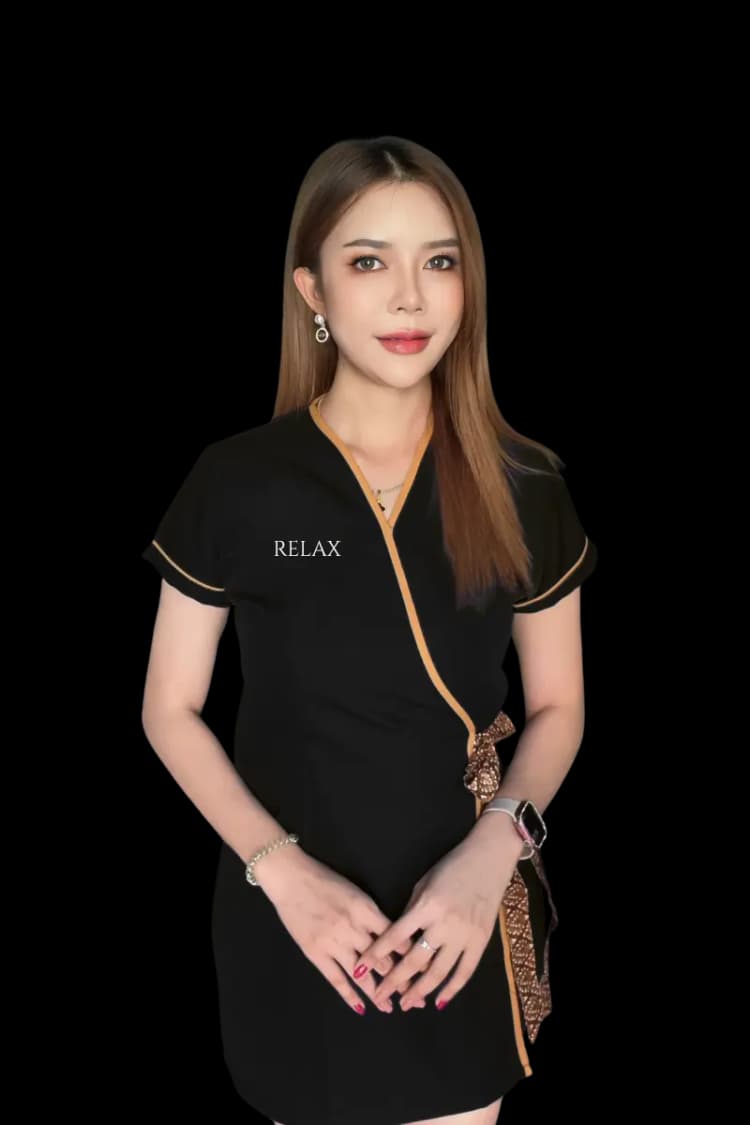
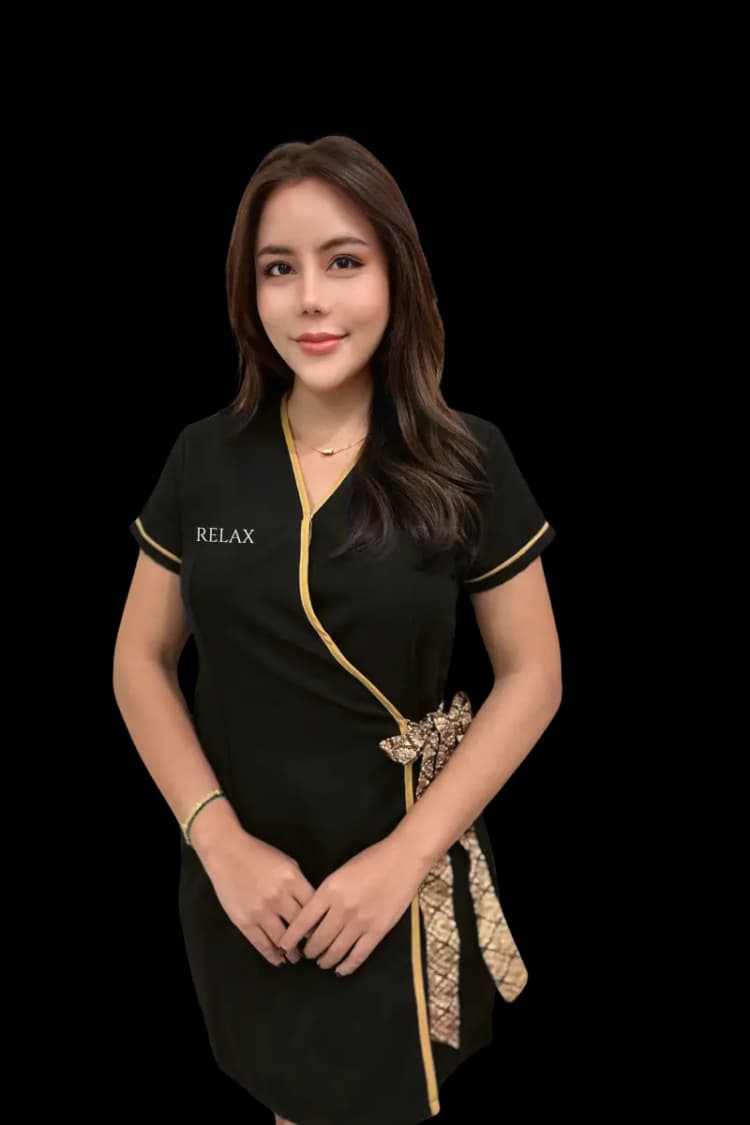
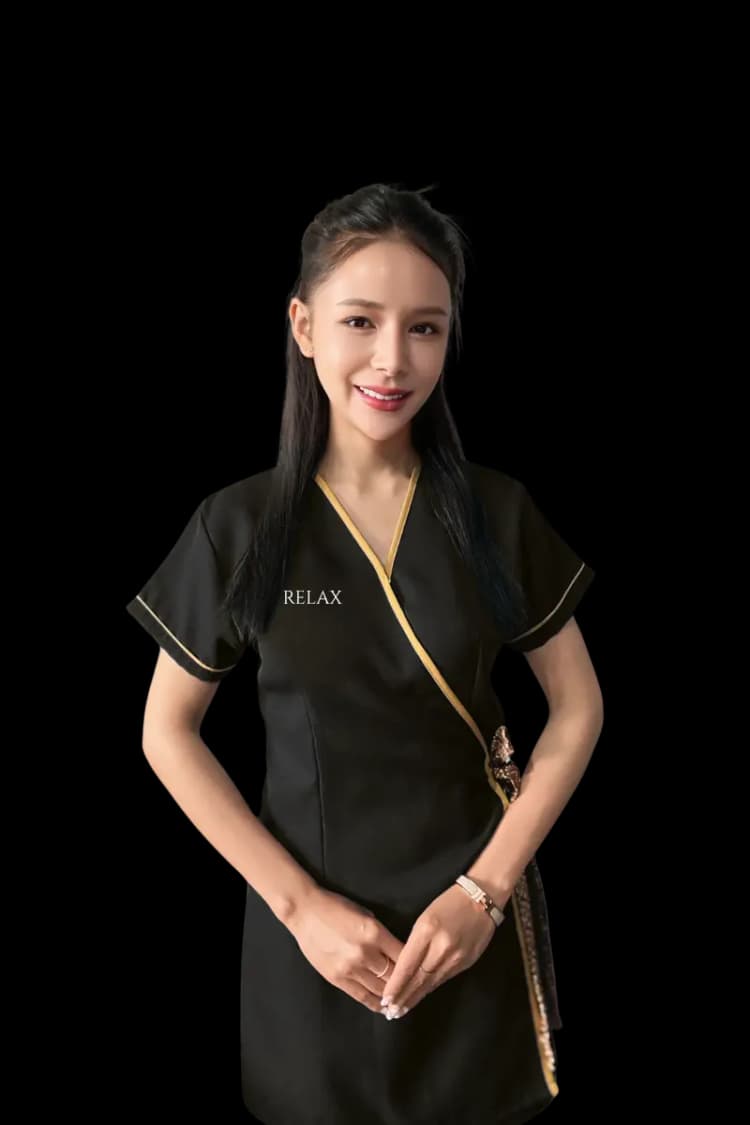
Therapists who cover Rama 3
Every one of them trained in Thailand and holds a Ministry of Public Health licence. You get told who is coming before they knock.

Booking as a driver
Almost everybody here drives, which changes both the complaint and the sensible way to book.
Say that you drive when you book. Forty minutes each way in Bangkok traffic produces a specific pattern in the lower back, hips and right leg, and it is quite different from the neck complaint the train commuters bring.
Book for after you get home rather than a fixed clock time. Traffic on the approach roads here is unpredictable and a therapist waiting while you sit on the bridge helps nobody.
Take the ninety if the problem is your back rather than your shoulders. Lower back work needs longer than neck work does and a sixty tends to run out just as it gets useful.
Consider a standing weekly slot. A driving commute is a chronic complaint rather than an occasional one and regularity does far more for it than an occasional rescue.
Give an hour of notice. In a district with no station, that hour is what lets us route somebody sensibly.
The malls, and the weekend
Several large shopping centres sit along this road and they are the centre of the district's social life, since there is very little street life to speak of.
The shopping centres
At the weekend they draw traffic from a wide area, and the road around them becomes slow in a way it is not on a weekday afternoon.
Weekend traffic
Our demand rises at the same time. Saturday and Sunday afternoons are the busiest of the week here, driven by households rather than individuals, with longer treatments and frequently more than one person.
The demand
That makes the weekend the one time worth booking ahead in this district, particularly if you want a specific therapist.
Best times
The easiest slots are weekday mornings and late evenings. Both are quiet, both have clear roads, and both consistently beat the middle of the arrival estimate.
The bridges, and reaching the other bank
Two major bridges cross the river from this stretch, and they matter for a reason that has nothing to do with reaching you: they are what a therapist coming from the Thonburi side has to use.
The bridges here are far apart, and the approaches to them climb from a considerable distance back, so a crossing is a genuine detour rather than a quick hop. That is why an address on this road can be quicker to reach from the middle of Bangkok than from a point directly opposite it across the water.
There are no passenger boat services along most of this stretch of the river, unlike the tourist section further north, so the water is a barrier here rather than a route.
If you are near one of the bridges it is worth saying so, because it is one of the few fixed landmarks on a road that otherwise runs for kilometres past very similar-looking towers.
Where Rama 3 ends
Northward it runs up toward Sathorn and Yannawa, and the Sathorn and Surasak pages cover the buildings from about the point where the towers thin out.
Inland it becomes Sathupradit, which is the connector road running north to south and has its own page. If you are not facing the river, that page probably describes your building better.
Southward the road continues to Rat Burana and the bridge, and past that toward the industrial fringe and the river mouth.
Westward is the river itself and across it Thonburi, which is a short distance as the crow flies and a considerable one by road since the bridges here are far apart.
The road is what defines this district rather than any boundary, so the useful thing to tell us is where along it you are.
Price, and the district with no station
This district asks about price for the same reason Bang Na and Bearing do: the journey is long, and it seems reasonable to expect that to show up somewhere.
It does not. Sixty minutes of traditional Thai is nine hundred baht here as it is everywhere in Bangkok, and there is no minimum booking. Nothing is added for the absence of a rail connection, though the distance itself does carry the transportation support fee, quoted with your total.
What the journey shows up in is the arrival window, quoted at forty to sixty-five minutes rather than dressed up as something shorter. That honesty is the whole trade for a flat price.
No payment is taken when the booking is made and no deposit is held. The therapist is paid at the end in cash, by card or by PromptPay, for the amount the confirmation message quoted.
Everywhere we go in Rama 3
Find yours below. If it is not here we almost certainly still come, so send the building name and we will confirm in a minute.
Stations
- BTS Chong Nonsi
- BTS Surasak
- MRT Lumphini
- BTS Saint Louis
- BTS Saphan Taksin
- Sathorn Pier
Streets and sois
- Rama 3 Road
- Sathupradit Road
- Nang Linchi Road
- Chan Road
- Charoen Krung Road
- Soi Rama 3 Soi 30
- Yannawa Road
- Rat Burana Road
Landmarks
- Central Rama 3
- Terminal 21 Rama 3
- Asiatique across the river
- Bhumibol Bridge
- Rama 3 riverside promenade
- Wat Chong Nonsi
- Bangkok Christian Hospital
Buildings we travel to
Listed as places we deliver to. We have no arrangement with any of them and nothing here should be read as one.
Hotels
- Chatrium Hotel Riverside
- Montien Riverside Hotel
- Ramada Plaza Bangkok Menam Riverside
- Bandara Suites Silom
- Ibis Bangkok Riverside
Condominiums and residences
- Supalai Casa Riva
- The Pano Rama 3
- Star View Rama 3
- Lumpini Place Rama 3
- U Delight Residence Riverfront
- Rhythm Sathorn Narathiwas
Who books in Rama 3
- Car commuters
- Driving to Sathorn or Silom in fifteen minutes. Lower back and hips rather than the neck complaint the train districts bring.
- Riverside tower residents
- Large apartments, high floors, good views, and late aromatherapy bookings.
- Weekend households
- Saturday and Sunday afternoons, longer treatments, and frequently more than one person in the flat.
- Families behind the road
- Older housing inland, schools nearby, and addresses that need a soi number rather than a tower name.
- Late bookers
- The district is genuinely quiet after dark and the roads clear, so a late booking beats the middle of the estimate.
Questions about Rama 3
Why does it take so long to reach Rama 3?
Is there anything I can do to shorten it?
I drive to work rather than taking the train. Does that change the treatment?
My building entrance is a car drop-off. Will she find the door?
When is the best time to book here?
Is there a surcharge for the distance?
I am inland rather than on the river. Same page?
Can several of us book at once?
Near Rama 3
Sathupradit
The connector road between Sathorn and the river. Offices, schools and older housing, all of it inland.
Sathorn
Embassies, corporate towers and the densest run of five-star rooms in Bangkok.
Surasak
The quiet western end of the business district, where the towers thin out and the old shophouses begin.
Thonburi
The far bank. A river to cross, canals behind it, and half the rent of the other side.
Riverside
The grand hotels on the Chao Phraya. Almost entirely visitors, and the boat is the road.
A therapist to your door in Rama 3
Message us with the building name and a time. Nothing is taken up front, and you pay the therapist when she has finished.